
Definition
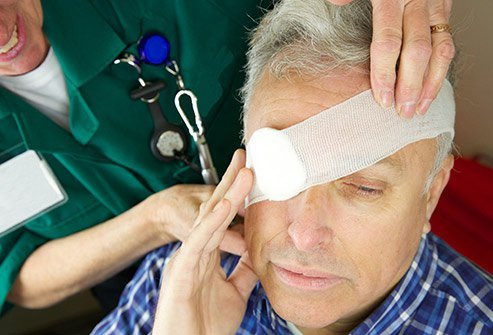
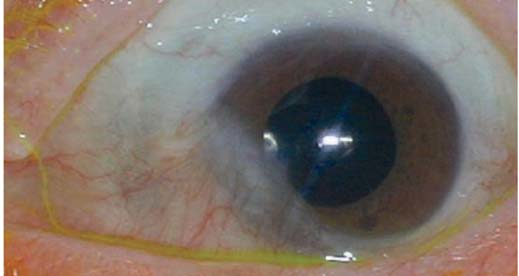
Sometimes, you may feel as if something is in your eye. This may indicate a foreign object stuck to the eye membrane or conjunctiva, the transparent layer that covers the white of the eye (sclera) and the inner eyelid. A foreign object in the conjunctiva refers to something lodged on its surface. This is common and can often be resolved by removing the object. The foreign body may include a loose eyelash, dust particles, metal fragments, tiny insects like ants, small seeds, and so on. This condition can happen to anyone, regardless of age, gender, or race.
Causes
Various types of foreign objects can become stuck in the conjunctiva, the most common being metal, plastic, glass fragments, and organic materials such as loose eyelashes, small insects, or seeds. Foreign objects may also embed in the conjunctiva, especially if you’ve recently been working with metal, such as in a factory or using a hammer on metal.
Risk Factor
The main factors that increase the risk of a foreign object entering the conjunctiva are occupations involving metal, not using eye protection, and male gender. These injuries often occur during work or at home and are most common in people aged 21 to 40.
Symptoms
Common symptoms include a sensation of a foreign object in the eye that cannot be precisely located, eye irritation, and red, watery eyes that occur after activities such as metal welding, gardening, or motorcycle riding. The foreign object may be visible without magnification, although some may require the doctor to examine the eye by everting the eyelid. Usually, this condition does not affect vision; however, any vision impairment may indicate corneal damage.
Diagnosis
Diagnosing a foreign object in the conjunctiva is relatively straightforward. Symptoms often begin with a clear and sudden trigger. If the object is visible to the naked eye, you may attempt first aid at home, as explained in the Management section.
If you decide to see a doctor, they will first assess the sharpness of vision in both eyes to check for significant visual impairment. The doctor will also check if the object is embedded or just on the surface, as treatment will differ. The doctor may directly inspect the eye to locate the foreign object and determine if the damage is limited to the outer parts or extends to the inner parts of the eye. Additional examinations, like fundoscopy, may be used to check for red reflexes inside the eye.
If the foreign object isn’t found through direct examination, the doctor may evert the upper and lower eyelids to search for an object lodged in the inner part of the eyelid. A slit lamp may be used to aid this examination. Additional tests, such as ultrasound, X-ray, or CT scan, may be conducted to look for any internal damage not visible to the naked eye.
If necessary, a fluorescein stain test can be done to detect any corneal damage. If corneal injury is found, the doctor will treat it along with removing the foreign object.
Management
You may perform first aid for a foreign object in the conjunctiva, but keep these points in mind:
- Do not rub your eyes, as this can scratch the cornea, potentially blurring your vision.
- Avoid using cotton swabs or sharp objects to remove the foreign object, as they may further injure your eye.
- Wash your hands before attempting any first aid to reduce the risk of infection.
- If you wear contact lenses, remove them before starting first aid to prevent further damage. Sometimes the foreign body sensation may be caused by a torn contact lens, but do not attempt to remove any torn lens fragments that aren’t visible, as this may worsen any scratches.
Here are steps for first aid:
- Wash your hands with soap and running water. If you wear contact lenses, remove them first.
- Try to flush the foreign object out using a gentle stream of clean water. Use a small cup to support the cheekbone just below the lower eyelid.
- Alternatively, you can use a shower stream aimed at your forehead, just above the affected eye, while you hold your eyelids open.
If helping someone else with first aid:
- Wash your hands with soap and running water.
- Have the person sit in a well-lit area.
- Carefully inspect the affected eye to locate the foreign object. Gently pull the upper eyelid upward and ask them to look down, and do the opposite with the lower eyelid.
- If the object is floating on the eye's surface, try using a pipette with clean water to flush it out or tilt the person’s head back and pour clean water gently over the eye from a glass or faucet.
If you decide to see a doctor, they may numb the eye before removing the object, especially if it's difficult to remove or very painful. The doctor will also likely prescribe antibiotic ointment to apply before bed or as instructed to prevent infection. If there is corneal damage or vision issues, a follow-up may be required after a few days or weeks.
Complications
Foreign objects in the conjunctiva can lead to infections and vision problems. Infections may affect the conjunctiva or cornea, or in severe cases, lead to infections within the eyeball (endophthalmitis). Vision issues may arise due to scratches (abrasions), corneal injuries, or infections from external to internal parts of the eye. Without timely treatment, these complications could result in blindness.
Prevention
To prevent foreign objects from entering the conjunctiva, wear eye protection when working with metals, soil, harsh chemicals, and similar materials. Motorcyclists can reduce their risk by wearing helmets with closed visors.
When to See a Doctor?
Go to the nearest emergency room if:
- There is bleeding from the eye
- Your eye is exposed to harsh chemicals such as bleach, alcohol, etc.
- Flushing with water does not remove the foreign object
- The object is embedded in the eye
- You or the person affected experiences blurry vision
- Pain, redness, or the sensation of a foreign object persists for more than 24 hours after removal
Looking for more information about other diseases? Click here!
- dr. Alvidiani Agustina Damanik
Conjunctival Foreign Body | Columbia Ophthalmology. Retrieved 16 October 2021, from https://www.columbiaeye.org/education/digital-reference-of-ophthalmology/cornea-external-diseases/trauma/conjunctival-foreign-body.
Dahl, A. (2017). Conjunctival Foreign Body Removal: Overview, Periprocedural Care, Technique. Retrieved 16 October 2021, from https://emedicine.medscape.com/article/1844102-overview#showall.
Foreign object in the eye: First aid. (2020). Retrieved 16 October 2021, from https://www.mayoclinic.org/first-aid/first-aid/basics/art-20056645.
Seltman, W. (2021). Something Got in my Eye. What Do I Do?. Retrieved 16 October 2021, from https://www.webmd.com/eye-health/foreign-body-eye-treatment.
Kamjoo, S., Chabblani, J. (2021). Intraocular Foreign Bodies. Retrieved 20 March 2022, from https://eyewiki.aao.org/Intraocular_Foreign_Bodies_(IOFB).