

Other Brands/Names
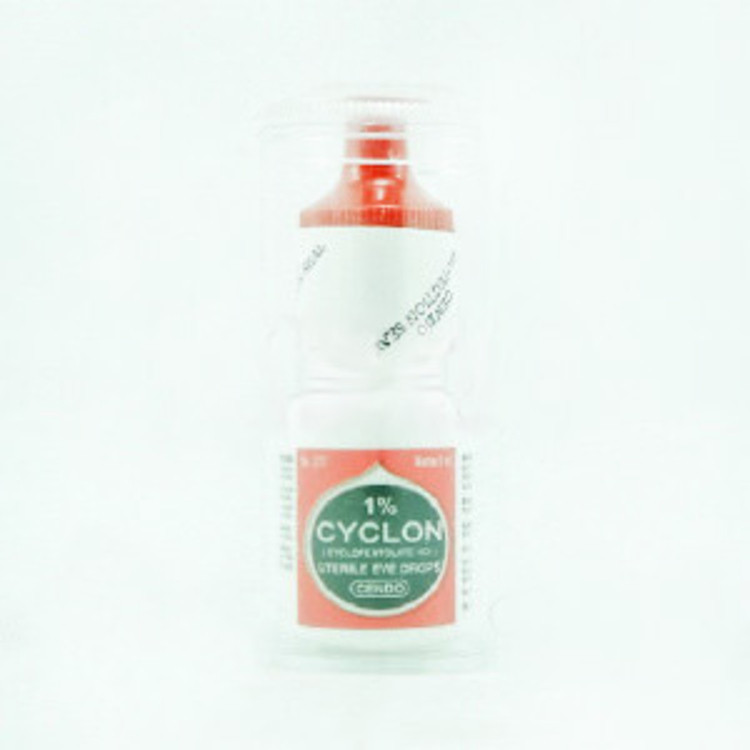
This medication is marketed under the brand name Cyclon 1%.
How It Works
This medicine works by blocking the action of the chemical compound acetylcholine on the optic nerve, which causes the pupil to widen (dilate) and the eye muscles to loosen (relax).
Indications
Cyclopentolate is used for several purposes:
-
To dilate the pupil and relax the eye muscles during eye examinations (as a mydriatic agent)
-
To treat uveitis (inflammation of the middle layer of the eye)
-
To treat iritis (inflammation of the iris around the pupil)
Contraindication
This medicine cannot be used in patients with closed-angle glaucoma.
Side Effects
Side effects you may experience after using this medicine in the eye include:
-
Temporary blurred vision
-
A burning sensation in the eye
-
Red eyes
-
Eye irritation
Serious side effects you should be aware of include:
-
Fainting
-
Eye pain and swelling
-
Mood and mental changes such as confusion, hallucinations, anxiety, behavioral changes, and hyperactivity
-
Vision changes such as seeing rainbows around lights
-
Increased eye pressure
-
Rapid and irregular heartbeat
-
Seizures
-
Slow and shallow breathing
Serious, life-threatening effects that also require attention include a severe allergic reaction (anaphylaxis) with symptoms of widespread redness, swelling of several body parts (face, tongue, and throat), and breathing problems such as shortness of breath.
Types
Cyclopentolate is supplied as 1% eye drops.
Dosage
The dosage of this medicine depends on the purpose, medical condition, and patient age, as follows:
To dilate the pupils and relax the eye muscles during eye examinations
-
Adults: 0.5%, 1%, or 2% cyclopentolate eye drops, instill one drop in each eye 30–60 minutes before the examination. A repeat instillation may be given 5–15 minutes later if needed. For darker eyes, the dose may be increased.
-
Children 3 months to 12 years old: instill one drop of 1% cyclopentolate in each eye 30–60 minutes before the examination.
-
Children 12 years and older: instill one drop of 0.5% cyclopentolate in each eye 30–60 minutes before the eye examination.
To treat uveitis and iritis
-
Adults: instill one drop of 0.5% or 1% cyclopentolate in the affected eye every 6–8 hours daily.
-
Children: the dose is the same as for adults.
Safety
This drug is classified as FDA Category C in pregnancy. This means adverse effects on the fetus have been seen in animal studies, while no direct studies in humans exist. It is unknown whether this drug passes into breast milk in breastfeeding women, so its safety is not established.
Drug Interactions
Interactions between cyclopentolate and other medicines, such as eye pressure–lowering drugs (carbachol and pilocarpine), may reduce their effectiveness.
Looking for more information about other drugs? Click here!
- dr Hanifa Rahma
Cyclopentolate – Mims Indonesia. (2022). Retrieved 25 June 2022, from https://www.mims.com/indonesia/drug/info/cyclopentolate?mtype=generic
Cyclopentolate Opthalmic – drugs.com. (2021). Retrieved 25 June 2022, from https://www.drugs.com/mtm/cyclopentolate-ophthalmic.html
Cyclopentolate Opthalmic – MayoClinic. mayoclinic.com (2022). Retrieved 25 June 2022, from https://www.mayoclinic.org/drugs-supplements/cyclopentolate-ophthalmic-route/side-effects/drg-20063264?p=1
Cyclopentolate HCL Drops – WebMD. (2022). Retrieved 25 June 2022, from https://www.webmd.com/drugs/2/drug-336/cyclopentolate-ophthalmic-eye/details