

Definition
A dissecting aneurysm is a tear in the inner layer of a blood vessel that has abnormally dilated (aneurysm). This condition most commonly occurs in the aorta, which is why it is often referred to as aortic dissection or dissecting aortic aneurysm. The aorta is the main blood vessel that carries oxygen-rich blood from the heart to the rest of the body. Due to the high pressure it must withstand from the heart, the aorta has thick layers, consisting of the inner layer (intima), middle layer (media), and outer layer (adventitia).
A dissecting aneurysm occurs when there is a tear in the inner layer (intima) due to the weakening of that layer. Typically, before the tear happens, the weakening of the intima causes abnormal dilation of the aorta, leading to an aortic aneurysm. When the intima tears, blood flows through the tear, separating the intima from the middle layer (media). The blood trapped between the layers creates a new space, disrupting the overall blood flow. If the aorta can no longer withstand the pressure, it may rupture completely.
A dissecting aneurysm is life-threatening and can lead to sudden death if not treated immediately. It usually occurs in men aged 60–70. The symptoms of a dissecting aneurysm can resemble other conditions, but quick diagnosis and treatment can significantly improve survival rates.
Causes
A dissecting aneurysm is caused by the weakening of the aortic wall. A tear in the inner layer (intima) allows blood to flow in and separate the inner layer (intima) and the middle layer (media). This tear causes 2 types of dissecting aneurysms, namely:
- Type A. This type is more common and more dangerous. The tear occurs in the part of the aorta closest to the heart and may extend down to the abdominal aorta.
- Type B. This type only involves the descending aorta, which is located around the abdomen.
Factors that contribute to aortic wall weakness include:
- Uncontrolled high blood pressure (hypertension)
- Arterial wall rigidity (atherosclerosis)
- Congenital heart valve abnormalities (bicuspid aortic valve)
- Congenital narrowing of the aorta (coarctation of the aorta)
Risk Factor
Risk factors for dissecting aneurysms include:
- Vascular inflammation, such as giant cell arteritis
- Male gender
- Age over 60 years
- Cocaine use, which can raise blood pressure
- Pregnancy, though the reason is unclear
- Heavy lifting, which can increase blood pressure
- Genetic disorders, such as Turner syndrome, Marfan syndrome, and connective tissue disorders (e.g., Ehlers-Danlos syndrome, Loeys-Dietz syndrome)
Symptoms
Symptoms of a dissecting aneurysm can mimic those of other heart conditions, such as a heart attack. Common symptoms include:
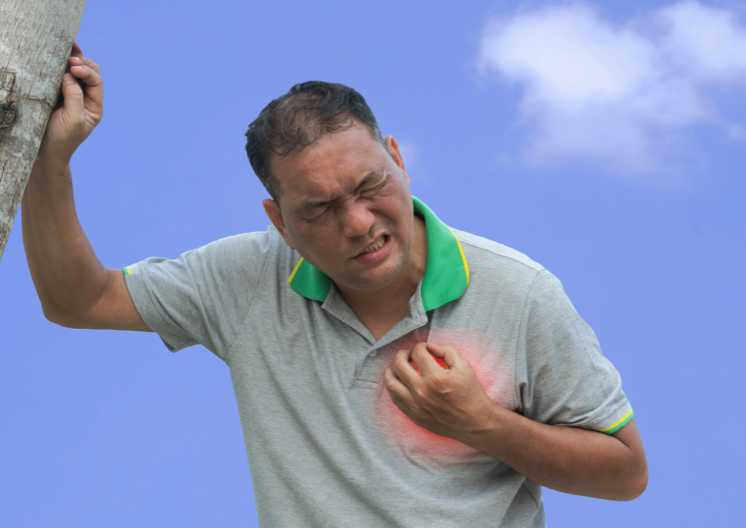
- Sudden, severe chest or upper back pain, often described as a tearing sensation that radiates to the back
- Sudden, severe abdominal pain
- Loss of consciousness (fainted)
- Shortness of breath
- Stroke-like symptoms, such as sudden vision problems, difficulty speaking, and weakness in the limbs
- Leg pain
- Weak pulse in one arm or leg compared to the other
- Difficulty walking
Diagnosis
Diagnosing a dissecting aneurysm can be challenging because its symptoms resemble those of other heart conditions. A doctor may suspect an aneurysm if:
- You experience chest pain described as tearing
- There is a difference in blood pressure between your right and left arms
- An x-ray shows an enlarged blood vessel
Other diagnostic methods include:
- Transesophageal echocardiogram (TEE): This examination uses sound waves to visualize or describe the condition of the heart at that time. TEE is done by inserting a probe into the esophagus so that the image of the heart is seen more clearly. This examination produces clearer images than a regular echocardiogram.
- CT scan of the chest: Compared to an echocardiogram, a CT scan can show the heart more clearly. Additionally, it is quick, which makes it useful in emergency situations.
- Magnetic resonance imaging (MRI): This examination creates detailed, high-resolution images, particularly of soft-tissue organs like muscles, using radio waves and magnets. Additionally, MRI can create moving images to display blood flow in real time. Emergency situations do not use MRI because it takes longer.
Management
Dissecting aneurysms require immediate treatment, which may involve surgery or medication, depending on the type of dissection.
Type A Dissecting Aneurysm
Treatment for type A dissecting aneurysm includes:
- Surgery: The surgeon removes the dilated section of the aorta to prevent further blood leakage. A synthetic graft is used to reconstruct the aorta.
- Medication: Medications are given to lower heart rate and blood pressure to prevent the dissection from worsening, usually before surgery.
Type B Dissecting Aneurysm
- Medication: Similar to Type A, medication is used to manage the condition.
- Surgery: Surgery is not always needed but may be required if complications arise, and the procedure is similar to that of Type A.
After surgery, you will need to continue taking medications to control your blood pressure for the rest of your life. You will also need to have your condition checked every once in a while, depending on your doctor.
Complications
Complications from dissecting aneurysms include:
- Death from severe bleeding
- Major organ damage, such as acute kidney failure or impaired blood flow to the intestines
- Stroke
- Aortic valve damage (aortic regurgitation) or complete rupture of the heart's outer layer (cardiac tamponade)
Prevention
You can reduce the risk of a dissecting aneurysm by preventing chest injuries and managing other risk factors, such as:
- Controlling blood pressure. If you have high blood pressure, monitor it regularly at home and take prescribed medications even when you feel fine.
- Quitting smoking. Smoking raises blood pressure, so talk to your doctor about ways to quit.
- Maintaining a healthy weight. Eat a low-salt diet rich in fruits, vegetables, and whole grains, and exercise regularly.
- Wearing a seatbelt when driving
- If you have a family history of aortic aneurysms or heart valve problems, consult your doctor. If you have a family history, your doctor will recommend specific medications to control and prevent the condition.
When to See a Doctor?
If you experience severe chest pain, difficulty breathing, or stroke symptoms, go to the emergency room immediately. While these symptoms may not always indicate a dissecting aneurysm or a serious condition, prompt evaluation by a doctor can help ensure proper diagnosis and treatment. Early detection of symptoms can save lives.
- dr Nadia Opmalina
Cleveland Clinic. (2021). Aortic dissection. Available from: https://my.clevelandclinic.org/health/diseases/16743-aortic-dissection
Farber MA. (2020). Aortic dissection. MSD Manual. Available from: https://www.msdmanuals.com/professional/cardiovascular-disorders/diseases-of-the-aorta-and-its-branches/aortic-dissection
Levy D, Goyal A, Grigorova Y, et al. Aortic Dissection. [Updated 2021 Dec 15]. In: StatPearls [Internet]. Treasure Island (FL): StatPearls Publishing; 2022 Jan-. Available from: https://www.ncbi.nlm.nih.gov/books/NBK441963/
Mayo Clinic. (2021). Aortic dissection. Available from: https://www.mayoclinic.org/diseases-conditions/aortic-dissection/symptoms-causes/syc-20369496