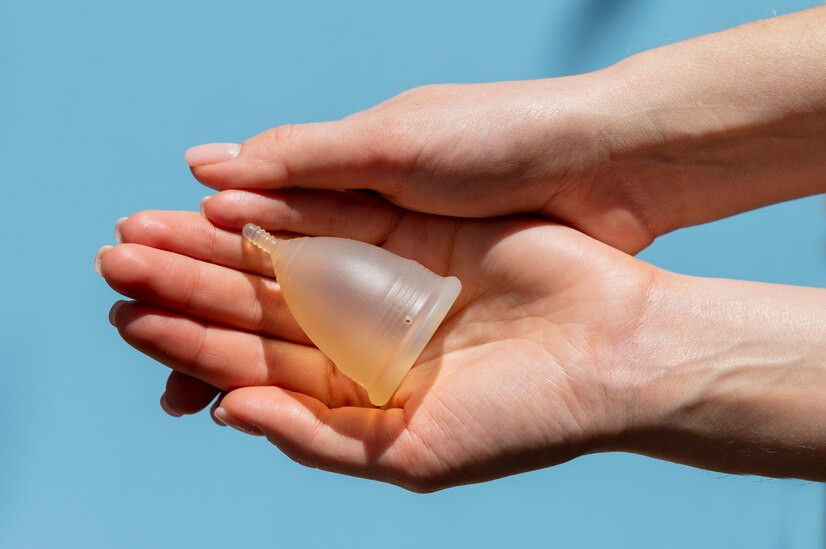
A menstrual cup is a device designed to collect menstrual blood. This bell-shaped product can be reused multiple times.
Before trying a menstrual cup, let’s explore its advantages and disadvantages.
What is a Menstrual Cup?
A menstrual cup is a feminine hygiene product used to collect menstrual blood. It has a bell-like shape with a stem and is made from flexible rubber or silicone, making it easy to insert into the vagina.
Many women choose to use menstrual cups during their periods because they are reusable. You simply remove, empty, wash, and reinsert them during your menstrual cycle. A menstrual cup can be worn for up to 12 hours.
Although it is inserted into the vagina, there’s no need to worry about it getting stuck or slipping out. The muscles in the vagina, known as the pelvic muscles, help hold it in place, often without you even realizing it. When used correctly, you won’t feel the menstrual cup until you take it out.
Considerations Before Using a Menstrual Cup
There are various brands of menstrual cups available. If you’re interested in using one, it is advisable to consult with a gynecologist (a doctor specializing in women’s reproductive health) and read reviews for different brands.
Here are several factors to consider before using a menstrual cup:
- Age
- The length of your cervix (the lower part of the uterus that connects to the vagina)
- The heaviness of your menstrual flow
- The capacity of the menstrual cup
- The strength of your pelvic muscles (muscles that support the bladder, uterus, and bowel)
- History of vaginal childbirth (giving birth through the vagina, as opposed to a C-section)
Women under 30 or those who have never given birth vaginally are advised to use a smaller size. Larger sizes are recommended for women over 30, those who have given birth vaginally, or those with heavier menstrual flows.
Advantages of Menstrual Cups
- Environmentally friendly and cost-effective
- Can be used longer than other menstrual products
- Holds more blood
- Minimizes odor
- Safe to use during intimate relations while menstruating
Disadvantages of Menstrual Cups
- It may be challenging to find the perfect size, requiring multiple attempts
- Inserting the cup comfortably can be tricky
- There’s a chance of spilling blood when removing it, which could stain underwear or floors
- Risk of allergic reactions if the cup is made of latex
- Risk of infection if not cleaned properly
How to Insert a Menstrual Cup
Menstrual cups can be safely used for 6-12 hours, depending on the weather and the heaviness of your menstrual flow. Here’s how to insert a menstrual cup:
- Wash your hands thoroughly before inserting the menstrual cup.
- Apply a water-based lubricant to the rim of the cup for easier insertion.
- Fold the menstrual cup in half, holding it with one hand with the rim facing up.
- Insert the cup into the vagina without the need for an applicator, like with tampons.
- The menstrual cup should sit a few centimeters below the cervix. After insertion, twist the cup inside the vagina to create a seal, which helps it stay in place and prevent leaks.
If the menstrual cup is inserted correctly, you won’t feel any discomfort. You can move, jump, sit, stand, and engage in other activities without worrying about the cup falling out.
For safety and compatibility with your body, consider discussing with a gynecologist before using a menstrual cup.
If you need medical advice or consultation, you can either visit a doctor or make use of the consultation features that are available in the Ai Care application by downloading the Ai Care application from the App Store or Play Store.
Looking for more tips and tricks for health, first aid, and other home treatments? Click here!
- dr. Pandu Lesmana
Annamarya Scaccia (2019). Everything You Need to Know About Using Menstrual Cups. Available from: https://www.healthline.com/health/womens-health/menstrual-cup.
Jennifer Rainey Marquez (2021). What’s a Menstrual Cup?. Available from: https://www.webmd.com/women/guide/menstrual-cup.
Planned Parenthood. How do I use tampons, pads, period underwear, and menstrual cups?. Available from: https://www.plannedparenthood.org/learn/health-and-wellness/menstruation/how-do-i-use-tampons-pads-and-menstrual-cups.