Definition
Femoral head necrosis, also known as avascular necrosis, refers to the death of bone tissue in the femoral head due to a lack of blood flow. This leads to the collapse of the affected bone. The process of tissue death typically unfolds over several months to years.
The femoral head is the top part of the femur bone, which is closest to the body's center and shaped like a head. The term "caput" comes from the Latin word for "head." In the United States, there are approximately 10,000 to 20,000 new cases of femoral head necrosis each year. The condition can be caused by both traumatic and non-traumatic factors. The blood vessels that supply the femur originate from the femoral head, which is fed by a branch of the femoral artery. This condition is often associated with high-dose steroid use or heavy alcohol consumption. Though anyone can develop femoral head necrosis, it is most commonly seen in adults aged 30 to 50.
Causes
Several factors can contribute to the development of femoral head necrosis. Below are the most common causes:
Trauma
Trauma is the leading cause of femoral head necrosis. When trauma occurs, it can cause the femoral head to become dislocated from its socket, known as the acetabulum. This dislocation can damage the blood vessels supplying the femoral head, leading to necrosis. Trauma is responsible for approximately 10% of femoral neck fractures and 10-25% of hip dislocations.
Sickle Cell Disease
Sickle cell disease is a condition where the red blood cells are abnormally shaped. This deformity prevents the cells, which are responsible for transporting oxygen throughout the body, from reaching the femur. As a result, ischemia occurs, which can lead to femoral head necrosis.
Autoimmune Disease
Autoimmune diseases are often linked to long-term steroid use, which can increase the risk of femoral head necrosis.
Leg-Calve-Perthes Disease
This condition, which affects children, is another cause of femoral head necrosis. The exact cause of this disease is still not well understood.
Risk Factor
Several risk factors can increase the likelihood of developing femoral head necrosis. These include:
-
Injury or trauma: Can damage the blood vessels in the femur, leading to necrosis.
-
Steroid use: Particularly high-dose steroids, which significantly raise the risk of femoral head necrosis.
-
Alcohol abuse: Chronic alcohol consumption also greatly increases the risk.
-
Medical treatments: Certain treatments, such as cancer therapies like radiation, may be linked to femoral head necrosis.
Symptoms
In the early stages of femoral head necrosis, some patients may not experience any symptoms. However, as the condition progresses, patients typically develop the following signs:
-
Pelvic pain that radiates to the spine.
-
Pain in the pelvis when walking or climbing stairs.
-
Pelvic pain that improves with rest.
-
In some cases, pelvic pain may persist even during rest.
Diagnosis
To diagnose femoral head necrosis, your doctor will ask about your symptoms, such as pelvic pain that radiates to the spine. They will inquire if the pain worsens with activity or alleviates with rest. Your medical history will also be reviewed, particularly for blood disorders and habits like long-term steroid use or alcohol consumption.
After the interview, the doctor will conduct a physical examination, which may involve:
-
Checking for any deformities in the legs.
-
Performing internal rotation and abduction tests to detect bone pain.
-
Assessing any limitations in your range of motion.
-
Palpating the pelvis to check for tenderness or pain.
Following the physical examination, the doctor may recommend several diagnostic tests, including:
-
X-rays: These will help detect any fractures in the bones.
-
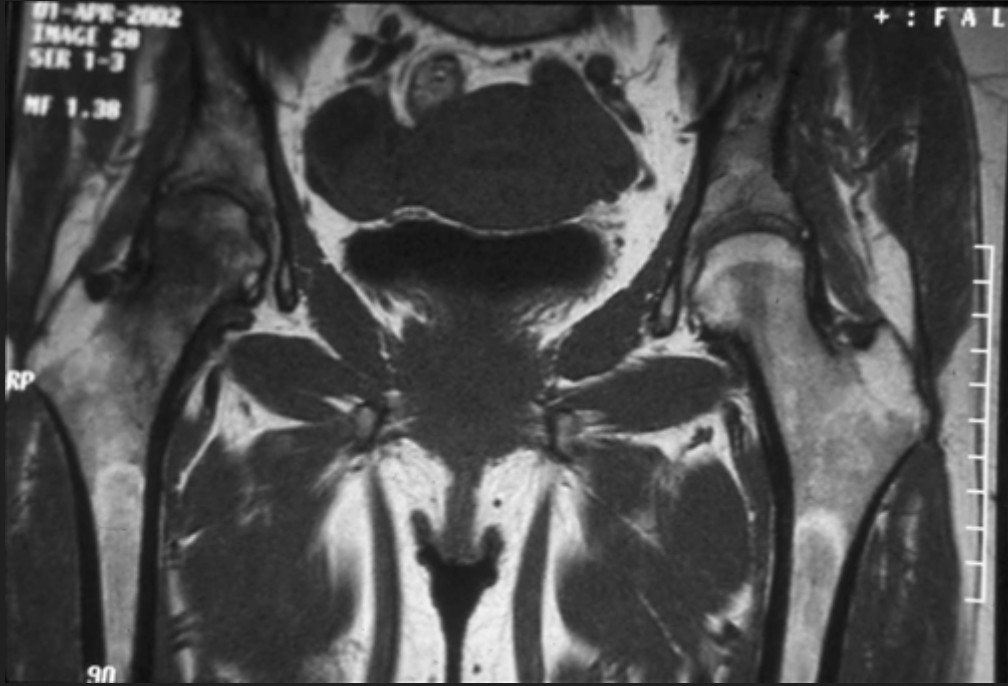
MRI: This test uses a magnetic field to visualize soft tissues, allowing the doctor to assess any damage to the tissue surrounding the femur.
-
Bone scans: A radioactive substance is injected into a vein, which helps detect issues with the blood vessels in your femur.
Management
The primary goal of treating femoral head necrosis is to prevent further damage to the bone. The treatment plan will depend on several factors, including the severity of symptoms and the findings from an MRI. Treatment may be either conservative or involve more invasive procedures.
Medications
In the early stages of femoral head necrosis, medications may help alleviate symptoms. Your doctor may prescribe the following medications:
-
Non-steroidal anti-inflammatory drugs (NSAIDs): These can be used to reduce pain and inflammation.
-
Osteoporosis medications: These can help slow the progression of bone necrosis.
-
Cholesterol-lowering medications: These drugs can help reduce cholesterol buildup, which may contribute to femoral head necrosis.
-
Vasodilators: Medications that help widen blood vessels to improve blood flow.
-
Blood thinners: These medications help prevent clot formation.
Invasive Procedures
If symptoms are severe, surgical intervention may be necessary to treat femoral head necrosis. Some surgical options include:
-
Core decompression: A procedure where the surgeon removes part of the bone's inner structure to reduce pain and promote the growth of new bone tissue and blood vessels.
-
Bone grafting: This involves the use of donor bone or synthetic material to strengthen the area affected by necrosis.
-
Bone reshaping: This involves smoothing the edges of the bone to help repair the joint.
-
Joint replacement: If the bone has collapsed, the damaged joint may be replaced with a metal prosthesis.
Complications
If femoral head necrosis is left untreated, the condition can worsen, leading to the collapse of the bone. It can also cause significant inflammation in the affected joint, further impairing mobility.
Prevention
To reduce the risk of developing femoral head necrosis, consider the following preventive measures:
-
Limit alcohol consumption: Excessive drinking can contribute to the development of femoral head necrosis.
-
Maintain low cholesterol levels: Elevated cholesterol can block blood flow to the bone.
-
Monitor steroid use: Always consult with your doctor if you are using steroids long-term, as they can increase the risk of necrosis.
-
Quit smoking
When to See a Doctor?
If you experience pelvic pain, it is important to see your doctor immediately. Early diagnosis and treatment can help speed up recovery and improve outcomes.
Looking for more information about other diseases? Click here!
- dr. Monica Salim
Statpearl. Femoral Head Necrosis. 2022
Orthobullets. Femoral Head Necrosis.2022
Mayoclinic. Avascular Necrosis. 2022