Definition
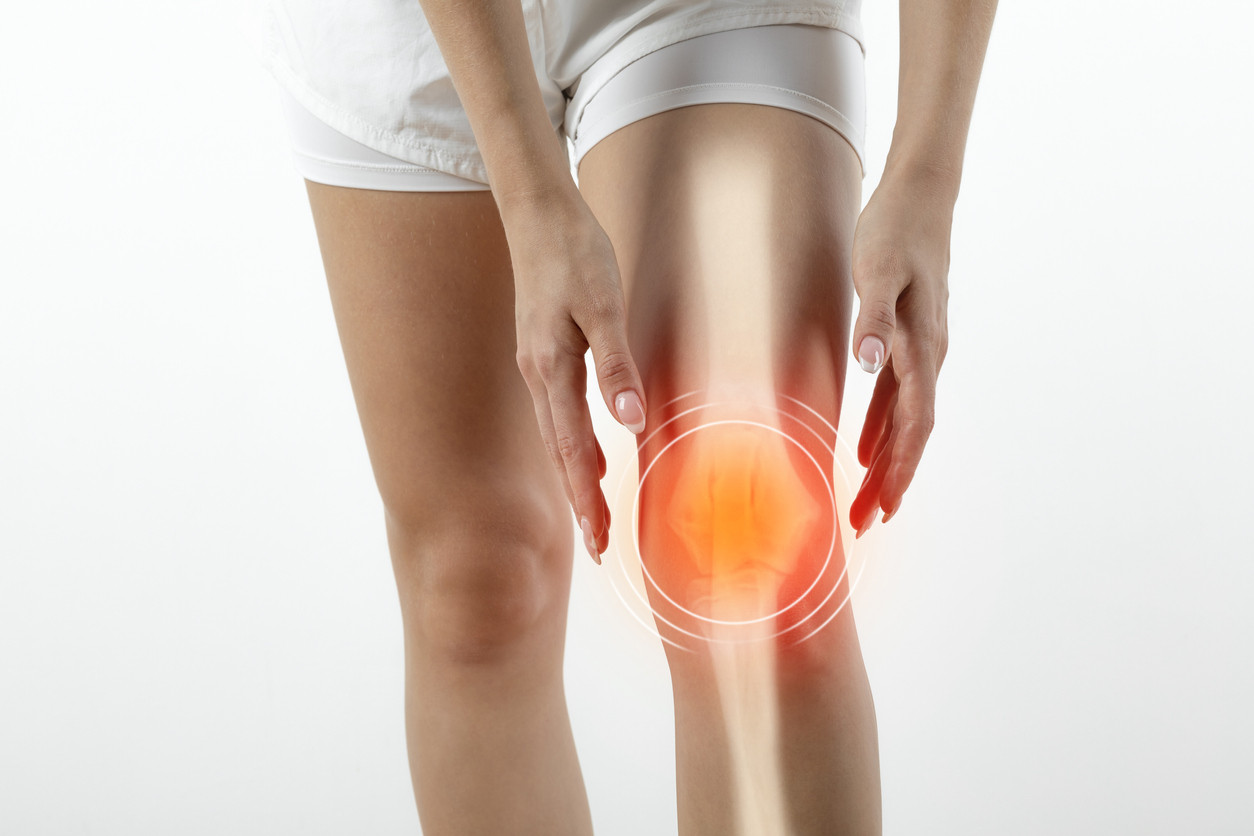
A knee ligament rupture refers to a tear in the ligament tissue supporting the knee joint. Ligaments are elastic, fibrous connective tissues that link bones together and help maintain the stability of a structure. These ligaments enable the knee joint to move properly.
There are four types of ligaments that support the knee joint:
- Anterior Cruciate Ligament (ACL)
- Posterior Cruciate Ligament (PCL)
- Medial Collateral Ligament (MCL)
- Lateral Collateral Ligament (LCL)
These four ligaments stabilize and support the knee joint. When one of them tears, it can lead to a significant decrease in the knee's function. Ligament tears are one of the most severe types of injuries. A knee ligament rupture often occurs when the ligament is stretched too far, leading to a tear.
The anterior cruciate ligament (ACL) is the most commonly torn knee ligament. This injury often happens during intense physical activities that overstretch the ligament, such as during sports. Movements like jumping too high or landing from a height can also cause an ACL tear. However, other ligaments in the knee can also be torn due to various factors.
Causes
Tears in the ligament can be partial or complete. The knee ligament may rupture when stretched too far, which can happen under these conditions:
- The knee experiences excessive pressure.
- Sudden and quick changes occur in the knee joint.
- The knee is forced to move in the opposite direction.
- The knee twists suddenly, while the foot stays in one direction, and the knee rotates in another.
Traffic accidents and sports that involve twisting knee movements frequently cause knee ligament injuries.
Risk Factor
Certain conditions and individuals have a higher risk of experiencing a knee ligament rupture, including:
- Regular exercises that involve:
- Abnormal jumping or landing
- Sudden stops after rapid movement and then twisting
- Rotating or pivoting at the knees and feet
- Athletes of basketball, soccer, tennis, skiing, or hockey
- Women are more prone to knee ligament tears
- Having a "knock-knee" (genu valgus) condition
- Suffering from connective tissue disorders or weaknesses
- Wearing ill-fitting shoes that put strain on the feet
- Using improper sports equipment that causes knee tension
Symptoms
Symptoms of a knee ligament tear include:
- A sudden popping sound in the knee
- Knee pain that worsens with movement
- Swelling around the knee joint
- Instability of the knee joint
- Difficulty moving the knee
- A sensation of the knee "giving way"
- The knee bends when standing
Diagnosis
Diagnosing a knee ligament rupture involves a physical examination of the knee joint. The doctor will assess:
- When the injury occurred
- The mechanism that caused the injury
- The stability of the knee joint
- Movement, strength, and tenderness around the knee joint
- The presence of other injuries
The doctor will also perform specific techniques to press on and move the knee to determine if there is a ligament tear. Patient-reported symptoms and details of the incident that led to the injury help confirm the diagnosis. Imaging tests like X-rays and MRI may also be needed. X-rays can reveal damage to the bones that make up the knee joint, while MRI provides a detailed image of the torn ligament tissue.
Management
Treatment for a knee ligament rupture can involve medical therapy or surgical procedures. The choice of treatment depends on factors such as:
- The mechanism of the injury
- The location of the ligament tear
- The severity of the ligament rupture
- The patient’s occupation and lifestyle
- The patient’s age
- Whether other injuries accompany the ligament rupture
Non-Surgical Treatment
If you sustain a knee injury, initial first aid steps include:
- Resting and avoiding activities that caused the knee injury.
- Applying cold compresses to the injured knee joint for 15 minutes.
- Using an elastic bandage around the knee joint.
- Elevating the knee.
In many cases, doctors prescribe pain relief medications to alleviate discomfort from ligament tears. Knee braces or supports can also aid in strengthening and stabilizing the knee joint during recovery.
Physical therapy, such as physiotherapy, is important in restoring full flexibility and stability to the knee joint. The goal is to strengthen the knee, improve balance, reduce pain and swelling, restore muscle strength (in the thighs, knees, and shins), and help patients return to normal activities.
Surgical Treatment
Surgery is recommended for a complete tear of the knee ligament. The procedure typically involves ligament reconstruction, where tissue is grafted from another part of the patient's body or from a donor. This graft is used to repair the torn ligament.
Recovery usually takes 6-12 months. To achieve the best results, it's crucial to attend regular follow-up appointments to monitor healing progress. After surgery, you may also need to engage in physical therapy as recommended. Home-based physical therapy exercises can further speed up recovery and restore knee function.
Complications
If left untreated, a knee ligament rupture can lead to complications such as:
- Stiffness and weakness in the knee joint
- Reduced knee mobility
- Worsening knee pain
- Inflammation in the knee joint (osteoarthritis)
- Blood clots from the tear worsen the condition
- Damage to the cartilage in the joint
Post-surgery complications may include:
- Infection, though rare, is prevented by antibiotics before and after surgery
- Blood clots, which are a low risk but might require blood thinners for those at risk
- Post-surgical pain
- Knee weakness and stiffness
Prevention
While it’s difficult to prevent knee ligament ruptures, there are ways to reduce the risk:
- Regularly stretch and strengthen your thigh muscles.
- Warm up before engaging in heavy physical activities.
- Gradually increase physical activity intensity. Avoid sudden increases in exercise frequency.
When to See a Doctor?
If you experience a knee injury accompanied by pain and a popping sound, it's essential to visit the nearest emergency room (ER) for proper treatment.
Looking for more information about other diseases? Click here!
- dr Hanifa Rahma
Evans J, Nielson JE. Anterior Cruciate Ligament Knee Injuries – StatPearls. (2022). Retrieved 20 November 2022, from https://www.ncbi.nlm.nih.gov/books/NBK499848/.
Alvin Wei-i. Anterior Cruciate Ligament (ACL) Tear – KidsHealth. (2022). Retrieved 20 November 2022, from https://kidshealth.org/en/teens/acl-injuries.html.
Ligament Injuries to the Knee – Johns Hopkins Medicine. (2022). Retrieved 20 November 2022, from https://www.hopkinsmedicine.org/health/conditions-and-diseases/ligament-injuries-to-the-knee.
Wheler T. What Are Knee Ligament Injury? – KidsHealth. (2022). Retrieved 20 November 2022, from https://www.webmd.com/fitness-exercise/guide/knee-ligament-injuries.
Anterior Cruciate Ligament Rupture – Physio. (2022). Retrieved 20 November 2022, from https://www.physio.co.uk/what-we-treat/musculoskeletal/conditions/knee/knee-ligament-injury/anterior-cruciate-ligament-rupture.php.
Knee Ligament Surgery – NHS.UK. (2022). Retrieved 20 November 2022, from https://www.nhs.uk/conditions/knee-ligament-surgery/risks/.
ACL Tear: Symptoms, Complications, and Treatment – practo. (2022). Retrieved 20 November 2022, from https://www.practo.com/health-wiki/acl-tear-symptoms-complications-and-treatment/265/article.