
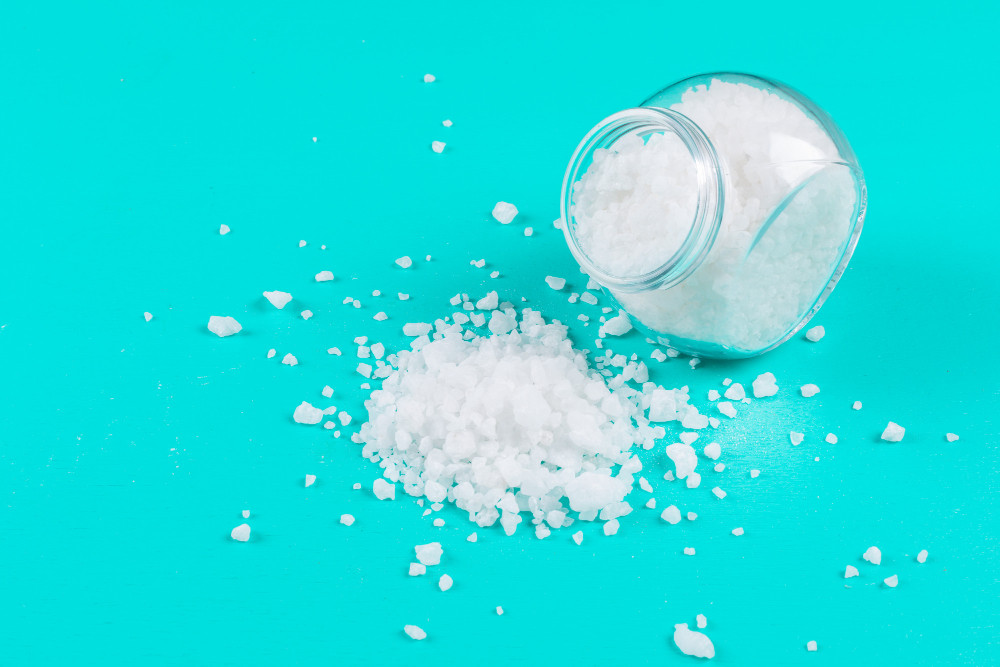
Epsom salt is a natural mineral that offers a wide range of benefits for health and beauty. Unlike Himalayan salt, which also contains many minerals, Epsom salt has a distinctly bitter taste, so it is not suitable for cooking. What health benefits does Epsom salt provide? Take a look at the explanation below.
Understanding Epsom Salt
Epsom salt is a well-known type of salt that is often used to manage your health. Originally found in Epsom, United Kingdom, this salt tastes bitter and is therefore not used as a seasoning. Even so, some people still consume Epsom salt by dissolving it in water and drinking it.
Epsom salt is also known as magnesium sulfate. This salt is a compound made up of magnesium, sulfur, and oxygen. Because it is rich in minerals, Epsom salt is widely used to help people meet their mineral intake by dissolving the salt in water for soaking their body or as a shower.
Health Benefits of Epsom Salt
Some of the health benefits of Epsom salt include:
1. A source of magnesium
Magnesium is an essential mineral needed by the body, yet many people have low magnesium levels. Although the magnesium sulfate in Epsom salt can serve as a source of magnesium, its bitter taste makes it less suitable to be eaten or drunk.
One study found that people that soak their bodies in Epsom salt baths tend to have higher magnesium levels. This is why many people use Epsom salt baths as one way to support their magnesium intake. However, further research is still needed to confirm the benefits of magnesium absorption through bathing.
2. Helps relieve stress and supports better sleep
Higher magnesium levels are known to help reduce stress and support more restful sleep. Magnesium assists the brain in producing neurotransmitters that promote better sleep quality and help lower stress levels. Experts also believe that soaking in warm water can help relax tense muscles.
3. Helps relieve constipation
Magnesium is often used to help manage constipation. It works by drawing water into the colon, which softens the stool, stimulates bowel movements, and supports digestion. For constipation, magnesium is usually taken in the form of magnesium citrate, magnesium hydroxide, or magnesium oxide.
The FDA has approved magnesium as a laxative. However, drinking Epsom salt can cause side effects such as bloating and loose stools. If you plan to use Epsom salt as a laxative, you should use it cautiously and consider consulting a doctor first.
4. Reduces muscle soreness and relieves cramps
Adequate magnesium levels in the body may help reduce the buildup of lactic acid in muscles, which can cause muscle soreness after exercise. For this reason, people who experience muscle pain and cramps after physical activity are often advised to soak in a warm bath with Epsom salt.
Athletes who have low magnesium levels are also encouraged to take magnesium supplements to help maintain adequate levels.
Epsom salt, which is rich in magnesium, offers several potential health benefits, especially for easing muscle discomfort. To obtain these benefits, you can dissolve Epsom salt in warm water for bathing. However, more research is still needed regarding the full health effects of Epsom salt. If you notice symptoms that may be related to magnesium deficiency, consult a doctor.
Looking for information about nutrition, food and other diet tips? Click here!
- dr Hanifa Rahma
Elliott, B. (2023). Epsom Salt: Benefits, Uses, and Side Effects. Available from: https://www.healthline.com/nutrition/epsom-salt-benefits-uses
Cleveland Clinic. (2022). Should You Take an Epsom Salt Bath?. Available from: https://health.clevelandclinic.org/7-things-you-probably-didnt-know-about-epsom-salt/
Rath, L. (2021). Why Take an Epsom Salts Bath?. Available from: https://www.webmd.com/a-to-z-guides/epsom-salt-bath
Eske, J. (2020). Epsom salt uses, benefits, and side effects. Available from: https://www.medicalnewstoday.com/articles/epsom-salt