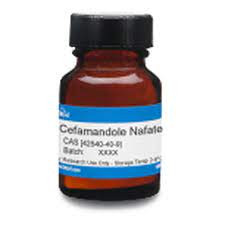

Other Brands/Names
Dofacef.
How It Works
Cefamandole is a cephalosporin antibiotic that works by eliminating bacteria that cause infections.
Indications
-
Lower respiratory tract infections, such as pneumonia, caused by bacteria like S. pneumoniae, H. influenzae, Klebsiella spp., S. aureus (both penicillinase-producing and non-penicillinase-producing), beta-hemolytic streptococci, and P. mirabilis.
-
Urinary tract infections caused by E. coli, Proteus spp., Enterobacter spp., Klebsiella spp., group D streptococci, and S. epidermidis.
-
Peritonitis caused by E. coli and Enterobacter spp.
-
Septicemia caused by E. coli, S. aureus, S. pneumoniae, S. pyogenes (group A beta-hemolytic streptococci), H. influenzae, and Klebsiella spp.
-
Skin and skin structure infections caused by S. aureus, S. pyogenes, H. influenzae, E. coli, Enterobacter spp., and P. mirabilis.
-
Bone and joint infections caused by S. aureus.
-
As an antibiotic for infection prevention in patients undergoing surgery.
Contraindications
Cefamandole should not be used in people with a history of allergy to cefamandole or other cephalosporin antibiotics.
Side Effects
-
Pain at the injection site
-
Nausea, vomiting, and diarrhea
-
Hypersensitivity or allergic reactions
-
Nephrotoxicity (kidney damage)
-
Hepatic dysfunction
-
Blood cell disorders (hematologic issues)
Types
Cefamandole is available as an injectable medication.
Dosage
Infectious Diseases
- Adults: 0.5-2 grams every 4-8 hours, depending on the infection's severity. It can be administered by injection or intravenously.
- Children >1 months old: 50-100 mg/kg/day in divided doses; for severe infections, the dose may increase to 150 mg/kg/day.
Prophylaxis (Prevention) of Infection During Surgery
- Adults: 1-2 grams, given 30-60 minutes before surgery, followed by 1-2 grams every 6 hours for 24-48 hours.
- Children >3 months old: 50-100 mg/kg/day, given 30-60 minutes before surgery, followed by the same dose every 6 hours for 24-48 hours.
Safety
- Patients with reduced kidney function should be closely monitored while using cefamandole, with kidney function regularly tested.
- This medication can cause bleeding, which can be managed with vitamin K administration. Regular blood tests such as bleeding time, clotting time, and other routine tests are recommended.
- During pregnancy, cefamandole should be used only if clearly needed. Discuss the risks and benefits with your doctor.
- It is unknown whether cefamandole passes into breast milk, so consult your doctor before breastfeeding.
Drug Interactions
- Cefamandole may increase the risk of hypoprothrombinemia (a condition where blood clotting is impaired, leading to an increased risk of spontaneous bleeding) when used with anticoagulants (blood thinners).
- Probenecid (used to treat high uric acid levels) can increase blood levels of cefamandole.
Looking for more information about other drugs? Click here!
- dr Anita Larasati Priyono
BPOM RI. Cefamandole. cekbpom.pom.go.id. Retrieved 23 April 2022, from https://cekbpom.pom.go.id//home/produk/69bhknndt7v4km8sdutf8ashf5/all/row/10/page/1/order/4/DESC/search/5/cefamandole
MIMS Indonesia. Cefamandole. Mims.com. Retrieved 23 April 2022, from https://www.mims.com/indonesia/drug/info/cefamandole?mtype=generic
Drugbank. Cefamandole. Drugbank.com. Retrieved 23 April 2022, from https://go.drugbank.com/drugs/DB01326
RxList. Mandol. Rxlist.com. Retrieved 23 April 2022, from https://www.rxlist.com/mandol-drug.htm#description