
Definition
A testicular teratoma is a type of tumor that develops from the germ cells in the testicle. These tumors can display a wide range of biological behaviors and, in some cases, may be aggressive. As a result, prompt diagnosis and treatment are essential. Testicular teratomas fall under the category of testicular cancer. Testicular cancer itself is a solid, malignant tumor commonly found in men between the ages of 20 and 35.
According to the World Health Organization's classification in 2016, testicular teratomas are divided into two categories:
-
Prepubertal teratoma: This type of tumor grows slowly. It typically does not spread, and the testes continue to function normally in terms of sperm production. This form of teratoma can occur in both children and adults. It also includes dermoid or epidermoid cysts.
-
Postpubertal teratoma: This type has the potential to spread, with around 22 to 37% of cases showing signs of metastasis.
Causes
The exact cause of testicular teratomas is not fully understood. However, tumors or cancers often arise due to abnormalities in chromosomes that regulate cell growth and death. Ongoing research is focused on uncovering the specific DNA and chromosomal changes that lead to the development of testicular cancer.
Risk Factor
Several factors may increase the likelihood of developing a testicular teratoma:
-
Age. Testicular teratomas are most commonly diagnosed in young adults between the ages of 20 and 35. In children, these tumors typically appear within the first two years of life, with the average age of onset being 20 months.
-
Fetal development issues. The risk of teratomas is higher when there are complications during fetal development. These can include low birth weight, undescended testicles, urinary tract abnormalities, maternal bleeding during pregnancy, advanced maternal age, jaundice in newborns, or an abnormally attached placenta.
-
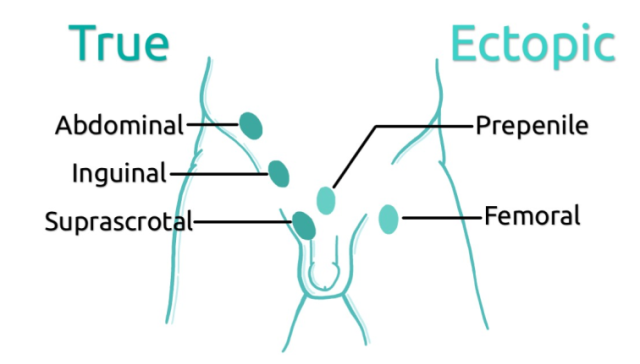
Undescended testicles (cryptorchidism). Cryptorchidism is the most significant risk factor for testicular tumors. About 3-5% of boys are born with testicles located in the abdomen. While most testicles descend into the scrotum within the first year, some do not descend naturally. If the testicles fail to descend, an operation called orchidopexy can be performed to move them into their proper position. Early descent is crucial, as undescended testicles greatly increase the risk of testicular cancer. Men with a history of undescended testicles are three times more likely to develop testicular cancer than those whose testicles descended normally at birth.
-
History of testicular tumors. Men who have previously been diagnosed with testicular cancer are at a significantly increased risk (12 to 18 times greater) of developing cancer in the other testicle. Those who have had testicular cancer should be vigilant about monitoring their remaining testicle for signs of recurrence, with regular check-ups being essential for up to 5-10 years.
-
Radiation exposure. Exposure to radiation, particularly in the pelvic region, is a key risk factor for testicular tumors.
-
Genetic factors. A family history of testicular cancer increases the likelihood of developing a testicular teratoma. The risk is four times higher in siblings of affected individuals.
Symptoms
Testicular teratomas can present with various signs and symptoms, including:
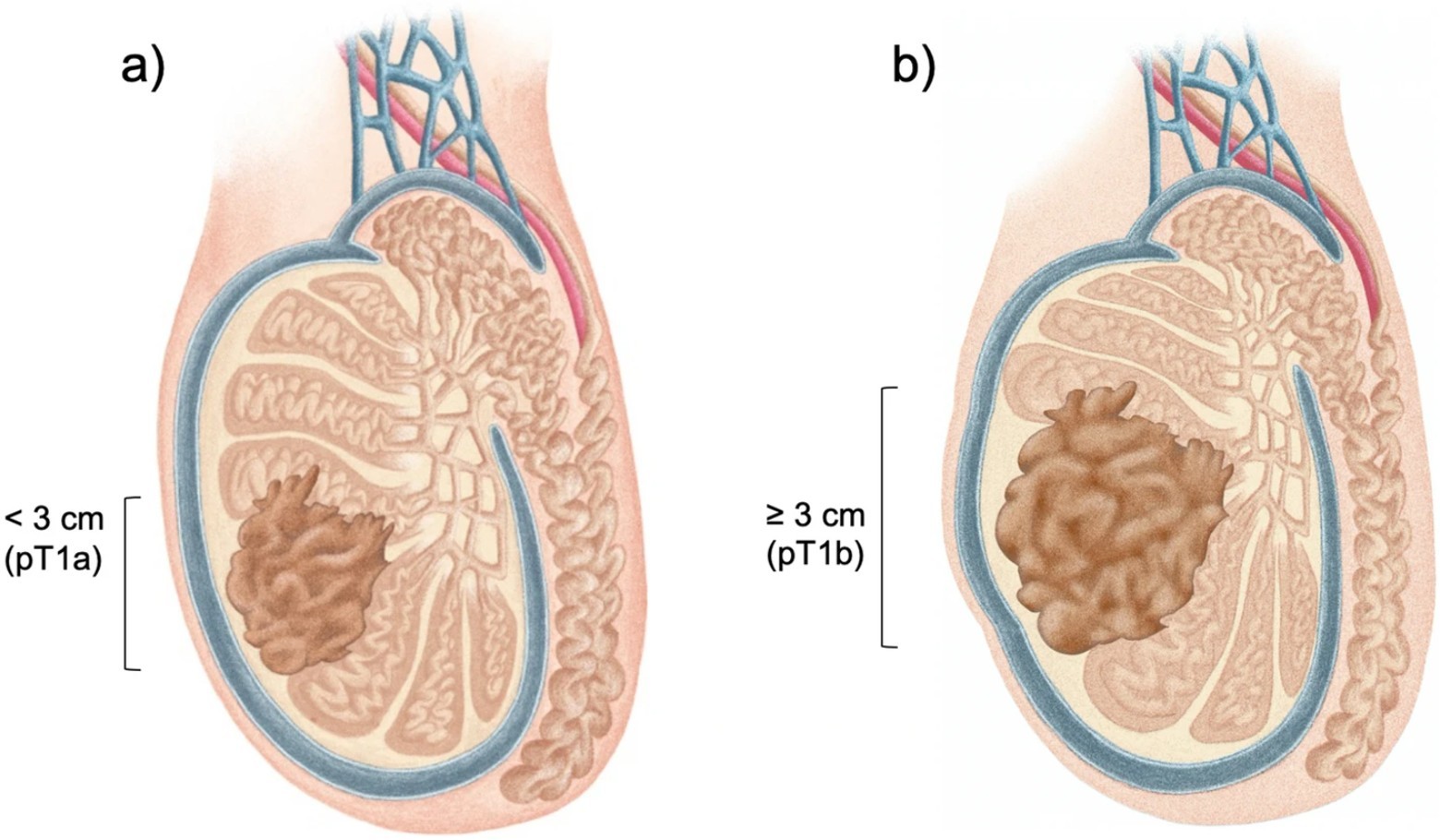
- A lump in the testicle, typically on one side, is the most common symptom. Tumors on both sides are extremely rare.
- The testicle may swell, although it is usually not painful. Pain can occur if the tumor bleeds, leading to bruising or twisting of the testicle.
- Lymph nodes in the groin may become enlarged.
- Some men may experience pain in the groin area associated with the tumor.
Diagnosis
The doctor will first ask about your symptoms and medical history, particularly concerning previous issues such as undescended testicles, testicular torsion (twisted testicles), groin injuries, and any growths or lumps. Following this, the doctor will conduct a physical examination and order supporting tests, such as radiology and laboratory exams, to confirm the diagnosis and determine the stage of the disease. These tests may include blood tests, abdominal and testicular ultrasound, chest X-ray, CT scans of the abdomen, pelvis, and chest, MRI, and PET scans.
-
Blood tests. Tumors often produce substances that can be detected in the blood, such as hCG (human chorionic gonadotropin) and AFP (alpha-fetoprotein). These levels typically increase in testicular teratomas, but they may also be elevated in other types of tumors.
-
Ultrasound. Ultrasound is the preferred radiology technique for evaluating testicular abnormalities. It is non-invasive, simple to perform, and highly effective at identifying lumps in the scrotum. It can distinguish between lumps originating in the testicles and those outside the testicles, with an accuracy rate of up to 99%.
-
Histology. The only definitive way to confirm testicular cancer is through a microscopic examination of the tumor tissue. This is known as histological analysis.
Management
The primary treatment for testicular lumps suspected to be malignant is the surgical removal of the affected testicle. Afterward, the patient may opt for the placement of a testicular prosthesis for cosmetic purposes. Radiotherapy is not effective in treating testicular teratomas.
For patients with localized tumors, the outlook is generally favorable, and surgery can be performed. In cases where the cancer has spread, the prognosis becomes more concerning. Metastatic tumors are less responsive to chemotherapy, so the focus of treatment in such cases is to completely remove the tumor via surgery.
For men of reproductive age, it may be advisable to store sperm in a sperm bank before treatment. This is because treatments like surgery, radiotherapy, and chemotherapy can impact fertility.
Complications
Testicular cancer has a high cure rate, with a 5-year survival rate of approximately 95%. However, teratomas are linked to higher rates of tumor spread and have a greater likelihood of being resistant to treatment. They also contribute to higher mortality rates.
Symptoms of tumor spread include:
-
Persistent cough
-
Coughing up blood
-
Shortness of breath
-
Swelling or enlargement of the male breast
-
A lump or swelling in the neck
-
Lower back pain
The surgical removal of the testicle and surrounding lymph nodes can lead to other complications, such as retrograde ejaculation, where semen moves back into the bladder rather than exiting the body.
Prevention
While testicular tumors cannot be prevented, performing regular self-exams on the testicles is a useful way to detect any changes that may need to be addressed with a doctor. Many experts recommend performing a monthly self-exam to identify potential issues early.
When to See a Doctor?
You should consult a doctor if you notice any changes in your testicles, such as swelling or the development of a lump. While lumps in the scrotum can have various causes, testicular tumors are rare. However, the earlier the treatment is started, the higher the chances of a full recovery.
Looking for more information about other diseases? Click here!
- dr Ayu Munawaroh, MKK
Farci, F., & Shamsudeen, S. (2022). Testicular Teratoma. Retrieved 30 August 2022, from https://www.ncbi.nlm.nih.gov/books/NBK567728/.
Dall C, et al. (2022). Retrieved 30 August 2022, from https://www.pathologyoutlines.com/topic/testisteratoma.html
Gaillard, F. (2022). Testicular teratoma | Radiology Reference Article | Radiopaedia.org. Retrieved 30 August 2022, from https://radiopaedia.org/articles/testicular-teratoma