Definition
Ejaculation disorders involve issues related to a man's ability to release semen from the penis during climax in sexual intercourse. This can manifest as ejaculation that occurs too quickly, too slowly, not at all, or with pain.
Ejaculation disorders are the most common form of sexual dysfunction in men and often underlie male infertility issues. It's normal for men to occasionally experience delayed ejaculation. However, if this persists, it can lead to poor sexual satisfaction, stress, and emotional trauma for both the man and his partner.
Below is a classification of ejaculation disorders in Japan as of 2019, modified based on the ICSM 2015 (International Consultation on Sexual Medicine) and ICD-11 2018 (International Classification of Diseases) classifications.
- Inability to ejaculate
A. Inability to ejaculate through masturbation and sexual intercourse
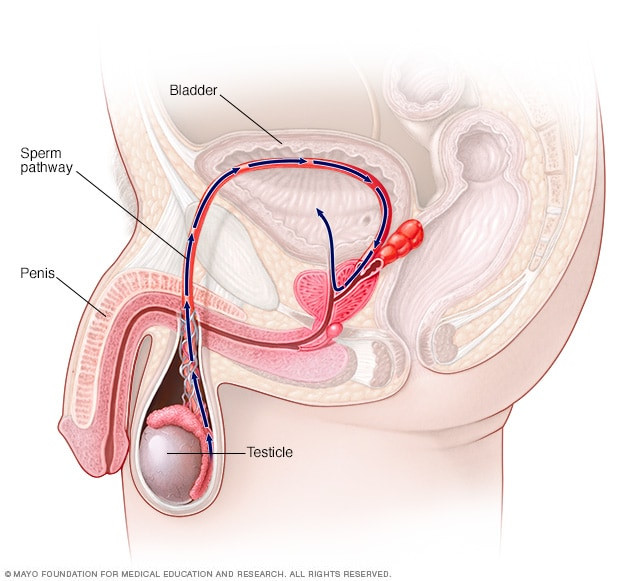
a. Retrograde ejaculation, where semen flows back into the bladder instead of exiting through the penis.
b. Anejaculation, a condition where orgasm occurs without the release of semen from the penis.
B. Intravaginal Ejaculation Disorders (the patient can still ejaculate during masturbation):
- Abnormal ejaculation time
A. Premature/early ejaculation
B. Delayed ejaculation
- Pain during ejaculation
- Anhedonic ejaculation (spontaneous ejaculation that is not pleasurable)
Causes
Male sexual function is divided into five stages:
- Sexual desire
- Erection
- Sexual intercourse (such as penile penetration into the vagina)
- Ejaculation
- Orgasm
Normal ejaculation occurs when semen can be expelled from the penis when a man reaches climax during sexual intercourse. Ejaculation is a reflex, typically requiring about 9 minutes from sexual penetration.
Ejaculation disorders can arise due to various causes, such as other medical conditions, side effects of medication or surgical procedures, and mental health issues. In most cases, the condition stems from a combination of physical and psychological factors, including:
- Depression
- Anxiety disorders
- Performance anxiety during sexual activity
- Sexual fantasy issues
- Low self-confidence regarding body image
- Certain medications like antihypertensives, antidepressants, antiepileptics
- Urinary tract infections
- Spinal cord or pelvic nerve injuries controlling orgasm
- Prostate gland surgery
- Diabetic neuropathy
- Hormonal disorders
Risk Factor
Several factors increase a man's risk of experiencing ejaculation disorders:
- Older age
- Erectile dysfunction
- Psychological conditions such as depression or anxiety disorders
- Certain medical conditions like diabetes or multiple sclerosis
- Specific medical procedures, such as prostate surgery
- Medications, especially antidepressants or certain blood pressure medications
- Poor communication or problems with a partner related to sexual relationships
- Excessive alcohol use
Symptoms
Premature Ejaculation
Premature ejaculation is a medical condition where ejaculation occurs too soon after penile penetration into the vagina. The patient may ejaculate within 1 minute after vaginal penetration during initial sexual activity. Alternatively, a patient who previously had no issues during sexual intercourse may gradually experience reduced time to ejaculation until it becomes as short as 3 minutes.
Premature ejaculation can lead to frustration and avoidance of sexual activity. It occurs in about 30% of men and is the most common type of ejaculation disorder.
Delayed Ejaculation
Delayed ejaculation occurs when ejaculation happens long after sexual stimulation, beyond what is considered a normal timeframe. This happens to many men as a normal occurrence but can become a problem if it persists long-term or causes frustration for oneself or their partner. Typically, the time to ejaculation after vaginal penetration extends to 25-30 minutes or more.
Delayed ejaculation can be a permanent issue existing even before someone engages in sexual activity or can be acquired later in life. It may occur continuously or situationally, only happening with specific partners or under certain conditions.
Retrograde Ejaculation
This condition occurs when some or all semen does not flow out through the penis but instead flows back into the bladder during sexual climax. Retrograde ejaculation can cause fertility issues.
Anejaculation
Men do not experience ejaculation at sexual climax. This can be total anejaculation, where there is no ejaculation despite sexual stimulation, or situational anejaculation, where it only occurs under certain circumstances.
Diagnosis
To diagnose an ejaculation disorder, a doctor will inquire about your symptoms, medical and medication history, and sexual activity history. The evaluation generally includes:
- Physical examination of the body, penis, testicles, and rectum to identify any structural issues.
- Semen sample analysis to evaluate sperm count and quality.
- Urine sample after ejaculation if no semen is expelled. This test checks for retrograde ejaculation by detecting semen in the post-ejaculation urine sample.
- Blood and hormone tests.
- Transrectal ultrasound (TRUS) to identify structural problems. TRUS involves inserting an ultrasound probe into the rectum to view the male reproductive tract.
Management
The patient's and partner's age is crucial in selecting treatment, especially for patients of reproductive age who may want to have children. Treatment for ejaculation disorders generally involves pharmacotherapy (medication) and non-pharmacotherapy, such as behavioral therapy, reproductive therapy, etc.
Behavioral therapy includes sex education to change behaviors and psychological counseling to address issues like anxiety causing premature ejaculation. Education may involve relaxation techniques and methods to prolong arousal without erection or ejaculation. Behavioral changes can include:
- Stopping stimulation before climax
- Changing stimulation before climax
- Mental distraction from stimulation
Doctors will also consider if there are untreated medical conditions causing the ejaculation disorder and will aim to manage or cure them. Lifestyle changes recommended by doctors include:
- Maintaining sufficient and quality sleep at night
- Avoiding smoking
- Regular exercise
Prevention
There is no specific way to prevent ejaculation disorders. If you have certain medical conditions, follow your therapy to prevent complications like ejaculation disorders. Ask your doctor about the side effects of medications that may affect ejaculation in sexual relationships. Always involve your partner in resolving ejaculation issues, especially those related to psychological factors.
Complications
Possible complications of ejaculation disorders include:
- Decreased sexual pleasure for you and your partner
- Stress and anxiety regarding sexual performance
- Marital or relationship issues due to unsatisfactory sexual life
- Infertility
When to See a Doctor?
If you have issues regarding erectile dysfunction, ejaculation disorders, or other long-term sexual problems affecting your relationship, you should consult a doctor.
Looking for more information about other diseases? Click here!
- dr. Alvidiani Agustina Damanik
Ejaculatory Dysfunction | Urology Associates | Denver Metro. (2022). Retrieved 25 July 2022, from https://denverurology.com/male-urology/sexual-health/ejaculatory-dysfunction/
Delayed ejaculation - Symptoms and causes. (2022). Retrieved 25 July 2022, from https://www.mayoclinic.org/diseases-conditions/delayed-ejaculation/symptoms-causes/syc-20371358
Ejaculation Problems: Common Ejaculatory Dysfunctions and Disorders Impacting Orgasm and Sensation. (2021). Retrieved 25 July 2022, from https://prioritymensmedical.com/blog/ejaculation-problems-ejaculatory-dysfunctions-disorders/
Otani, T. Clinical review of ejaculatory dysfunction. (2019). Retrieved 25 July 2022, from https://ncbi.nlm.nih.gov/pmc/articles/PMC6780042/#.