
Definition
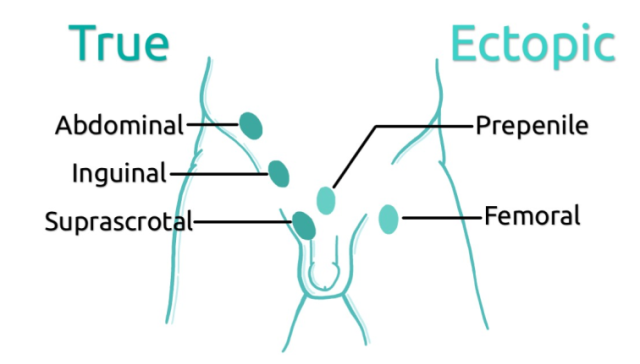
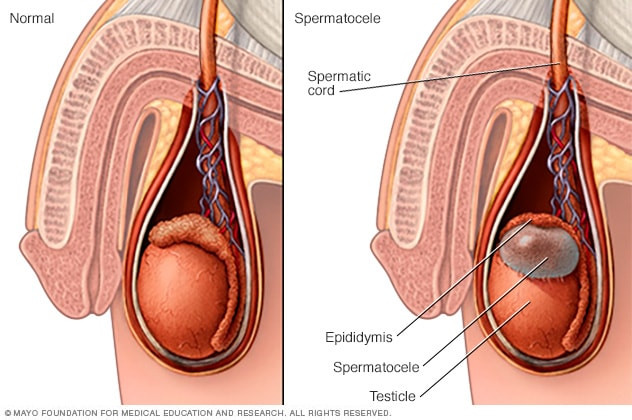
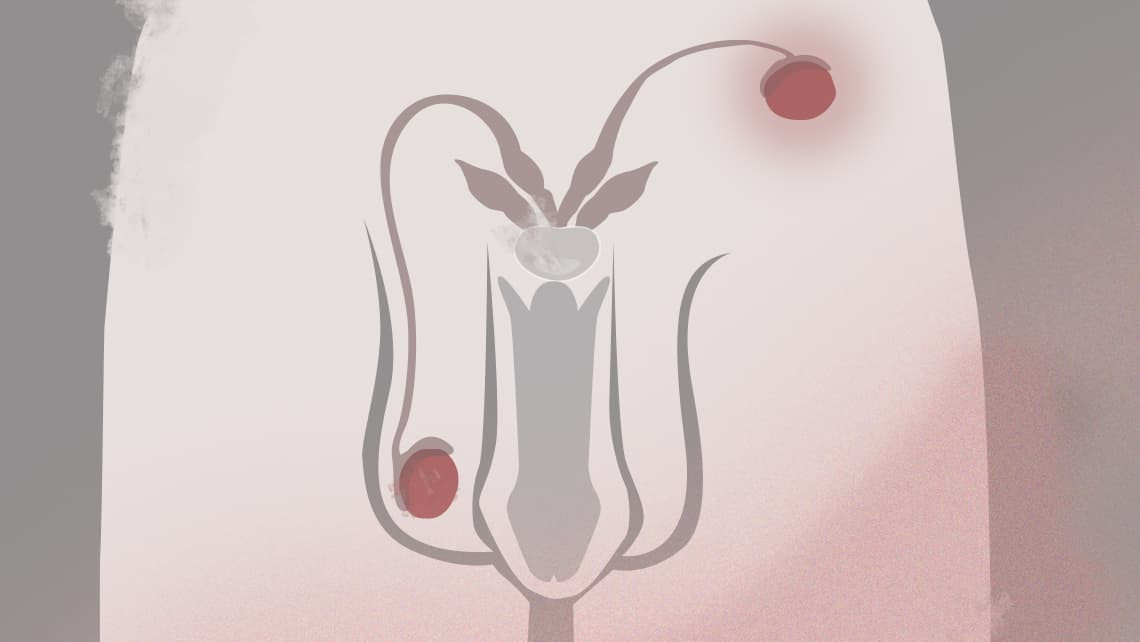
Undescended testicle or cryptorchidism is a condition where one or both testicles do not descend into the scrotal sacs. Under normal conditions, the testicles will descend from the abdominal cavity into the scrotal sac before the baby is born. The scrotum is a sac that hangs at the bottom of the penis and functions as a covering for the testicles.
There are two types of undescended testicles: unilateral (the condition of the absence of 1 testicle in the scrotum) and bilateral (the condition of the absence of 2 testicles in the scrotal sacs) conditions. Undescended testicles occur more often in male babies born prematurely than in babies born at term.
About 3-4 out of 100 newborn boys have this disorder. The incidence rate increases to 21 cases out of 100 babies with premature birth. Only 10 out of 100 babies experience bilateral undescended testicles.
Causes
Testicles form in the baby's lower abdomen while it is still in the womb. During the last few months of pregnancy, the testicles usually move down from the abdominal area. They move through a tube-like channel in the groin, called the inguinal canal, and then down into the scrotum.
Although the exact cause of undescended testicles is still unclear, experts believe that genetic factors, including the health of the mother and the baby, are thought to play a role in the occurrence of this disorder. These two factors can interfere with hormones, physical changes, and nerve performance, which play a role in testicular development.
Risk Factor
There are several factors that can increase the risks of congenital undescended testicles, including:
- Premature birth or low birth weight
- Family history with undescended testicles
- Pediatric medical conditions, for example cerebral palsy or abnormalities related to abdominal wall
- Women with diabetes in pregnancy or before pregnancy
- Alcohol consumption in pregnancy
- Smoking or exposed to cigarette smoke during pregnancy
- Exposed to pesticides during pregnancy
- Pregnant women with obesity
Symptoms
Symptoms of undescended testicles are quite typical. A sure sign to notice is the absence of testicles in one or both scrotal sacs. This condition can be immediately recognized when the baby is born because the pediatrician will perform an initial examination to ensure all body parts are complete.
Usually, this disorder is related to other diseases, namely:
- Cerebral palsy
- Mental retardation
- Abdominal wall abnormalities
- Other urogenital (reproductive system and urinary system) disorders
Diagnosis
Undescended testicles can be diagnosed with a physical examination performed by a pediatrician. The pediatrician will assess the newborn baby, and one of the examinations that must be carried out on baby boys is to examine both scrotums and confirm the location or position of the testicles.
If the testicles are not palpable in the scrotum, the doctor will evaluate and re-examine them in 6 months to see whether they have returned to their proper location.
It is important to know whether the testicles are undescended or unformed. Testicles that do not descend and remain in the stomach can cause the risk of tumor formation in the future. The presence of a tumor may not be realized until symptoms appear and the size of the tumor increases.
To ensure that the abnormality experienced is an undescended testicle, the doctor will carry out further examinations, such as:
- Laparoscopic surgery to determine whether the testicles are in the stomach area or not
- Ultrasound or MRI examination to see a detailed picture of the testicles and their location in the stomach
Management
The goal of treating this disorder is to return the testicles to their normal position in the scrotum and reduce the risk of complications that may occur.
If the baby is under 6 months old, the doctor usually recommends waiting until the child is 6 months old because, generally, the testicles will descend by themselves. However, if the testicles do not descend by the age of 6 months, the doctor will recommend a surgical procedure.
Management carried out before the child is 1 year old can reduce the risk of health problems, such as fertility disorders and testicular cancer. Earlier treatment will provide better results.
Surgery
Most cases of undescended testicles are treated with surgical procedures. This surgical procedure is called Orchiopexy, where the doctor will move the testicles into the scrotum and then sew them up.
Hormone Therapy
In hormone therapy, the child will be given a hormone injection, namely the hormone human chorionic gonadotropin (hCG). With this injection, it is hoped that the testicles can descend spontaneously into the scrotum. However, hormone therapy is no longer recommended because it is considered ineffective in treating this disorder.
Complications
If this condition is not treated promptly, undescended testicles will cause complications that can disrupt the patient's quality of life. The following are complications that can occur:
- Testicular cancer
- Men who experience undescended testicles have a higher risk of developing testicular cancer. It is not yet clear why this disorder can cause testicular cancer.
- Infertility or fertility problems
- Men with undescended testicles can make it difficult for their partners to get pregnant. Fertility problems can worsen if this disorder is not treated immediately.
- Inguinal hernia
- This condition is caused by organ protrusion that has moved to the groin or groin area.
- Trauma or injury
- If the position of the testicles is in the groin, the testicles may be damaged due to pressure on the pubic bone.
- Testicular torsion
- A condition in which the testicles are twisted so that the spermatic cord, which carries blood to the scrotum (scrotum) is twisted. This will reduce blood flow and cause sudden and severe pain in the testicles.
Prevention
Undescended testicles cannot be prevented, but the risk of it occurring can be reduced by doing the following things:
- Carry out regular prenatal examinations at the doctor, namely once a month in the first and second trimesters, and once every 2 weeks in the third trimester
- Avoid contact with dangerous chemicals during pregnancy, such as chemicals found in cleaning products or paint
- Maintain weight and control blood sugar during pregnancy
- Implement a healthy and nutritious diet
- Do regular exercise
- Avoid the use of cigarettes and alcohol during pregnancy
- Avoid exposure to hormonal drugs such as estrogen and xenoestrogens
When to See a Doctor?
If your child experiences symptoms and signs of undescended testicles, such as no testicles found in the scrotum or the scrotal sacs appear to be empty, immediately take your child to a doctor.
Immediate treatment must be provided if the testicles do not descend until the child is 6 months old to prevent further complications.
You can consult undescended testicle to our doctors by downloading the Ai Care application on Playstore or Appstore.
Looking for more information about other diseases? Click here!
- dr. Yuliana Inosensia
Leslie SW, Sajjad H, Villanueva CA. Cryptorchidism. [Updated 2022 Jun 11]. In: StatPearls [Internet]. Treasure Island (FL): StatPearls Publishing; 2022 Jan-. Available from: https://www.ncbi.nlm.nih.gov/books/NBK470270/
Medscape. Cryptochidism. Accessed November 29, 2022 from https://emedicine.medscape.com/article/438378-overview#a1
Urology Care Foundation. 2023. Undescended Testicles (Cryptorchidism). Available from: https://www.urologyhealth.org/urology-a-z/u/undescended-testicles-(cryptorchidism)
KidsHealth. 2022. Undescended Testicles (Cryptorchidism). Available from: https://kidshealth.org/en/parents/cryptorchidism.html
MayoClinic. 2023. Undescended Testicle. Available from: https://www.mayoclinic.org/diseases-conditions/undescended-testicle/symptoms-causes/syc-20351995
NHS. 2021. Undescended testicles. Available from: https://www.nhs.uk/conditions/undescended-testicles/
Ashley RA et al: Cryptorchidism: pathogenesis, diagnosis, treatment and prognosis. Urol Clin North Am. 37(2):183-93, 2010
Niedzielski JK et al: Undescended testis--current trends and guidelines: a review of the literature. Arch Med Sci. 12(3):667-77, 2016
Lee PA et al: Global disorders of sex development update since 2006: perceptions, approach and care. Horm Res Paediatr. 85(3):158-80, 2016