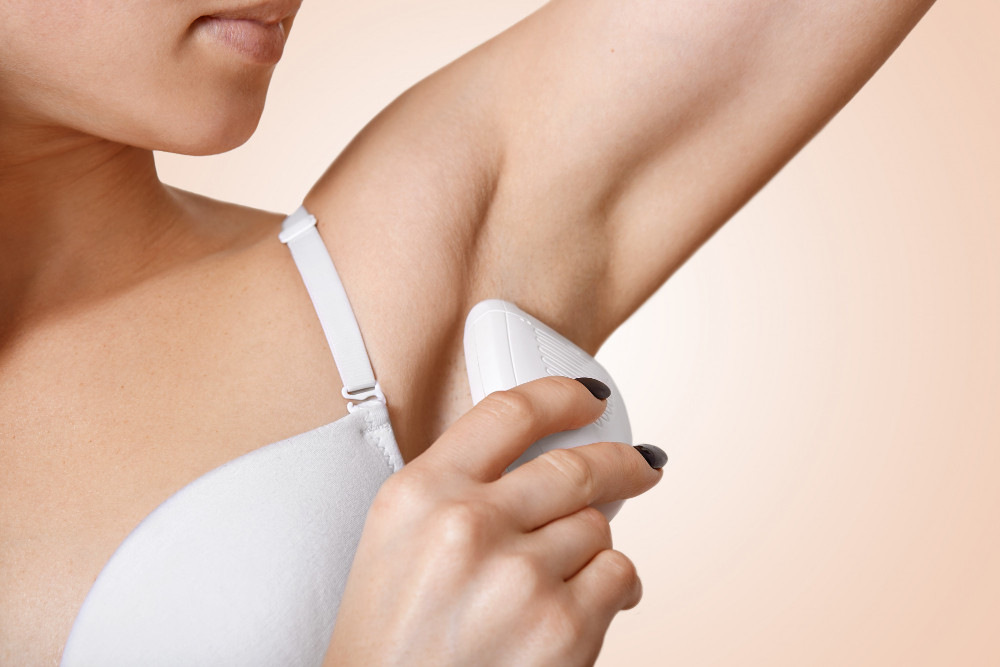
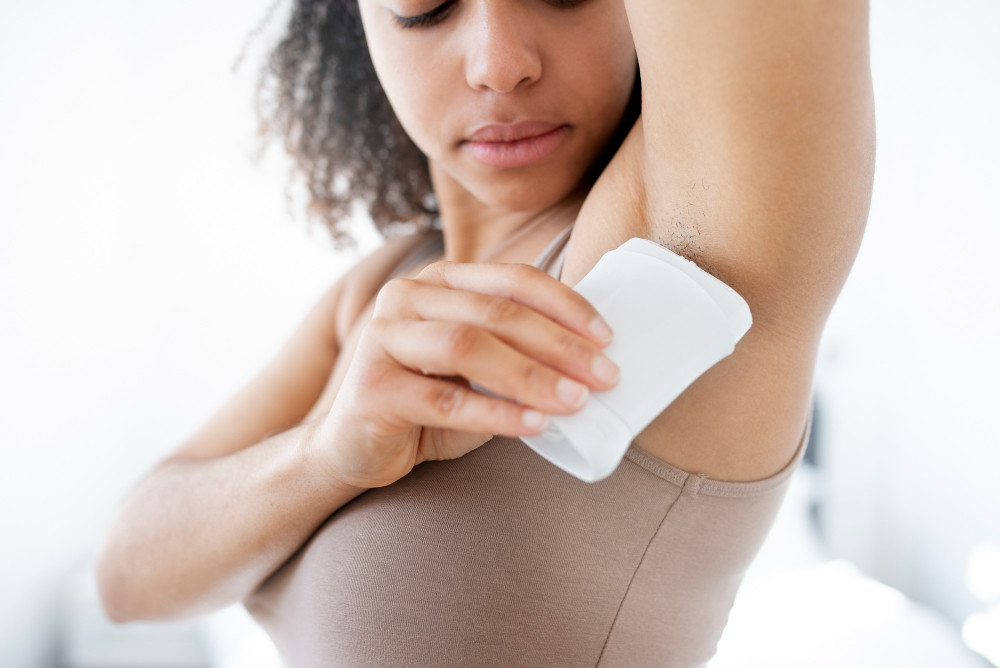
Body odor can undermine confidence. That is why many people use deodorants and antiperspirants to manage smell. Some worry that these products might raise cancer risk. Is that concern supported by evidence?
Why Are Deodorants and Antiperspirants Suspected of Causing Cancer?
Deodorant is a personal care product designed to reduce underarm odor. Most formulas are alcohol based, which lower skin pH and discourage bacterial growth in that area. Many deodorants also include fragrance to mask unpleasant smells.
Antiperspirants work differently. They reduce odor by limiting sweat production. To do this, antiperspirants commonly use aluminum salts that temporarily block sweat glands on the skin’s surface.
The belief that these products cause cancer is linked to the fact that many breast cancers begin in the upper outer portion of the breast near the armpit. Since this region is regularly exposed to deodorants and antiperspirants, some assume a connection.
Another idea is that ingredients applied daily, including after shaving, might build up and create “toxins,” leading to cellular changes beneath the skin that later become malignant.
This theory is often paired with the observation that men have lower breast cancer rates and typically do not shave their underarms. Underarm hair is said to reduce absorption of antiperspirant ingredients, which some argue could lower risk.
What Does the Evidence Say About Deodorants, Antiperspirants, and Cancer?
The American Cancer Society reports no strong evidence that links deodorant or antiperspirant use to cancer.
In one study that compared 813 women with breast cancer to 793 women without it, researchers did not find an association between breast cancer risk and using antiperspirants, using deodorants, or shaving underarms.
The study concluded that deodorant use is not a breast cancer risk factor.
The Cleveland Clinic also notes that, so far, there is no proof that deodorants or antiperspirants cause cancer, including breast cancer.
-
Aluminum and Cancer Risk
Concerns often focus on aluminum in antiperspirants. A 2021 analysis found no significant evidence connecting aluminum-containing antiperspirants with breast cancer.
Although very high aluminum exposure can affect DNA and gene expression, the fraction absorbed from antiperspirants is extremely small. Estimates suggest the body absorbs roughly 0.012 percent or less of applied aluminum, which is considered too low to initiate cancer.
-
Paraben and Cancer Risk
Parabens are another ingredient sometimes questioned. They act as preservatives that inhibit mold and microbial growth in cosmetic products.
Parabens can mimic estrogen activity to a limited degree, which has raised concerns about hormone effects. Some have argued that this could contribute to breast cancer in users of products that contain parabens.
However, Medical News Today reports that parabens in cosmetics are not the cause of breast cancer. Natural estrogen in the body has far stronger effects than the weak estrogenic activity of parabens.
Moreover, breast cancer also occurs in people who do not use deodorants with parabens, which argues against parabens as a trigger.
Based on current information, there is no scientific proof that deodorants or antiperspirants cause breast cancer. Products on the market are generally considered safe for controlling body odor and do not cause cancer.
If you prefer to be cautious, read labels and choose products that match your comfort level. If deodorant or antiperspirant does not control your odor, consult a doctor to look for underlying causes and discuss suitable treatment.
Looking for more information about health tips and tricks, first aid, and other home remedies? Click here!
- dr Hanifa Rahma
Cancer Treatment Centers of America. Does Deodorant Cause Cancer?. Available from: https://www.cancercenter.com/community/blog/2021/06/does-deodorant-cause-cancer
American Cancer Society. Antiperspirants and Breast Cancer Risk. Available from: https://www.cancer.org/healthy/cancer-causes/chemicals/antiperspirants-and-breast-cancer-risk.html
West, M., Tabackman, L. (2022). Is there a link between deodorant and cancer?. Available from: https://www.medicalnewstoday.com/articles/does-deodorant-cause-cancer
Cleveland Clinic. (2021). Can Deodorant Cause Breast Cancer?. Available from: https://health.clevelandclinic.org/can-deodorant-cause-breast-cancer/
Frothingham, S. (2019). Benefits and Risks of Deodorants vs. Antiperspirants. Available from: https://www.healthline.com/health/deodorant-vs-antiperspirant