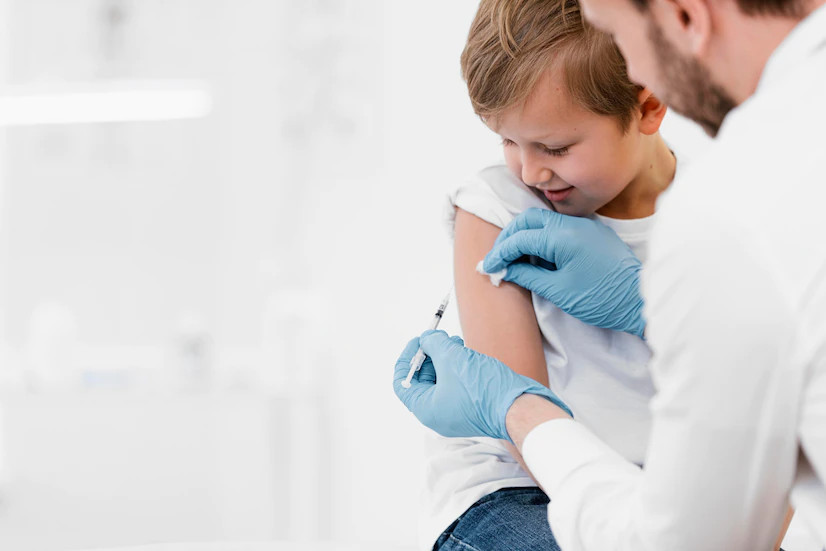

Immunizations to infant are given to help them build immunity so they are protected from serious, potentially life-threatening infections. Still, many parents worry about possible side effects, including the fear that vaccines might trigger other conditions such as autism. Is that concern supported by evidence?
Where Did the Idea That Vaccines Cause Autism Come From?
In Indonesia, the belief that vaccines can cause autism is still widespread. The vaccine that is most often accused of increasing autism risk is the MMR (measles, mumps, rubella) vaccine.
According to WebMD, this issue began with a publication claiming that the MMR vaccine could lead to autism spectrum disorders in children.
The research was conducted on only 12 children and concluded that the MMR vaccine could cause autism. A sample size this small is not considered sufficient to describe vaccine side effects in the wider population.
Although the study was later condemned as fraudulent by the General Medical Council in England, the claim that vaccines cause autism continued to spread and made many parents doubt the safety of childhood immunization.
That study then prompted many other researchers to investigate whether there was any real link between vaccines and autism. At least 12 follow-up studies have examined this question, and none have found evidence that vaccines cause autism.
In 2010, the General Medical Council in England formally stated that the original MMR–autism study was not only based on poor scientific methods, but also involved deliberate manipulation and falsification of data.
The WHO, together with health authorities in the United States and the United Kingdom, subsequently re-evaluated the available research on vaccination and autism in children and found no proof that vaccines cause autism.
Benefits and Side Effects of Vaccination
The WHO affirms that vaccines are generally safe and do not cause dangerous side effects in most people. Vaccination protects you from serious infectious diseases and also helps protect those around you.
When many people in a community are vaccinated, the spread of disease can be reduced and outbreaks can be prevented. Since vaccines have been widely used, several serious diseases such as diphtheria, polio, tetanus, and chickenpox, which were once common and sometimes fatal, have become rare.
According to the NHS, illnesses such as diphtheria and measles have fallen by more than 90% since vaccines were introduced. However, if vaccination rates drop, these infections can return again.
Like any medical procedure, vaccines can have side effects, but they are usually mild and short-lived. Some common reactions after vaccination include:
-
Fever
-
Soreness at the injection site
-
Redness or mild swelling at the injection site
-
Flu-like symptoms (such as fever, headache, reduced appetite, and fatigue)
These mild reactions can usually be managed at home with fever or pain medication, compresses at the injection site, drinking enough fluids, and getting plenty of rest.
If side effects are accompanied by a high fever above 38°C, stiff joints, or pneumonia, the child should be examined by a doctor immediately. In very rare cases, this may be related to problems with the child’s immune system.
For both children and adults, vaccines are safe and provide important health benefits. Parents are encouraged to keep their child’s immunization schedule up to date as protection against dangerous infectious diseases. If a dose has been missed or delayed, talk to a doctor about how to adjust the schedule.
Looking for more information about health tips and tricks, first aid, and other home remedies? Click here!
- dr Hanifa Rahma
Kids Health. Is There a Connection Between Vaccines and Autism?. Available from: https://kidshealth.org/en/parents/autism-studies.html
Bruce, D. (2022). Do Vaccines Cause Autism. Available from: https://www.webmd.com/brain/autism/do-vaccines-cause-autism
CDC. Autism and Vaccines. Available from: https://www.cdc.gov/vaccinesafety/concerns/autism.html
Sehat Negeriku. Hoax Imunisasi Masih Beredar. Available from: https://sehatnegeriku.kemkes.go.id/baca/umum/20190501/4230135/hoax-imunisasi-masih-beredar/