Definition
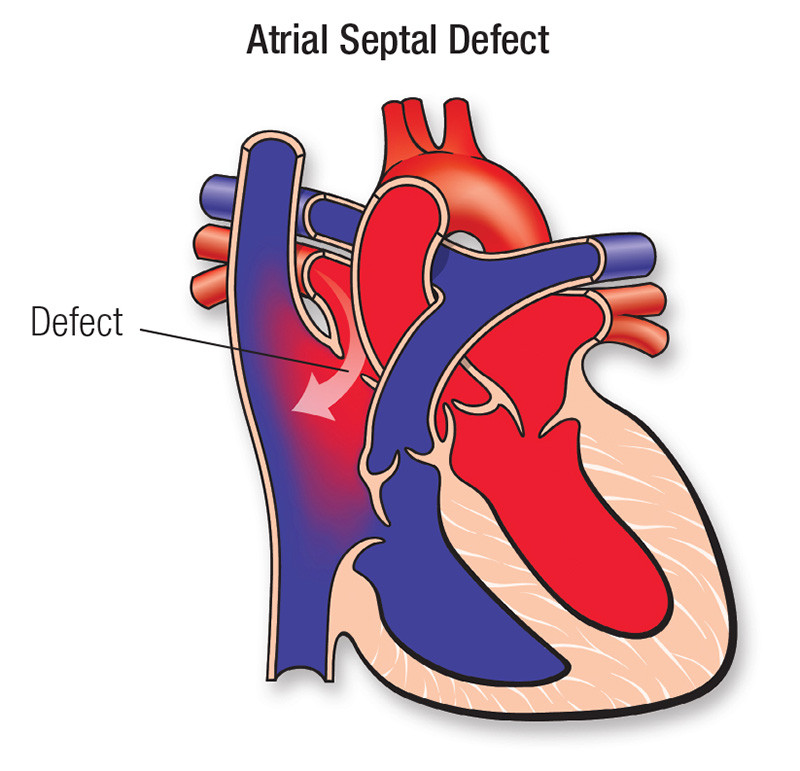
Atrial Septal Defect (ASD) is a congenital heart defect characterized by a hole in the septum, the wall that divides the two atria (upper chambers) of the heart. During fetal development, it is normal for the wall dividing the heart's upper chambers to have openings, which usually close naturally either during pregnancy or shortly after birth. If one of these openings fails to close, it results in a persistent condition known as ASD.
In ASD, the hole increases the amount of blood flowing through the lungs and, over time, can cause damage to the pulmonary blood vessels. This damage may lead to complications in adulthood, such as pulmonary hypertension and heart failure.
Research data indicates that approximately 2,118 babies are born each year in the United States with ASD. This means about 1 in every 1,859 babies in the U.S. is affected by ASD.
There are several types of ASD, including:
- Secundum ASD. The most common type, where the hole is located in the middle of the atrial septum.
- Primum ASD. This type occurs at the lower part of the atrial septum and may be accompanied by other congenital heart abnormalities.
- Sinus Venosus ASD. A rare type typically found at the upper part of the heart's dividing wall, often associated with other structural heart changes.
- Coronary Sinus ASD. Another rare type is where the wall between the coronary sinus (part of the heart's venous system) and the left atrium is absent.
Causes
The exact cause of ASD is not clearly understood. ASD is a structural anomaly that develops as the heart forms during pregnancy. Factors believed to play a role in ASD development include:
- Genetics
- Certain medical conditions
- Use of specific medications
- Environmental or lifestyle factors (e.g., smoking or alcohol abuse)
The human heart has four chambers, two atria (upper chambers) and two ventricles (lower chambers). Normally, the right side of the heart pumps blood to the lungs, where it picks up oxygen and then delivers it to the left side of the heart. The left heart then pumps the oxygenated blood through the aorta and distributes it to the rest of the body.
A large ASD can cause excess blood flow to the lungs and strain the right side of the heart. If untreated, the right side of the heart may eventually enlarge and weaken, and blood pressure in the lung arteries can rise, resulting in pulmonary hypertension.
Risk Factor
ASD develops during the heart's formation in pregnancy. Certain health conditions or medication use during pregnancy may increase the risk of ASD or other congenital heart defects in the baby. These factors include:
- Rubella infection during the first few months of pregnancy
- Diabetes
- Lupus
- Alcohol or tobacco use
- Use of illicit drugs, such as cocaine
- Certain medications, including some anti-seizure drugs and mood stabilizers
Symptoms
Many infants born with ASD show no signs or symptoms. Symptoms may not appear until adulthood and can include:
- Fatigue while breastfeeding (in infants)
- Shortness of breath, especially during exercise
- Fatigue
- Swelling in the legs, feet, or abdomen
- Irregular heartbeats (arrhythmia)
- Sensation of a fast, pounding heartbeat (palpitations) or a feeling of skipped beats
- A heart murmur detected by a doctor with a stethoscope
- Frequent respiratory infections or lung infections
Diagnosis
To diagnose ASD, a doctor will begin with a consultation with the child’s parents or caregiver, asking about any symptoms, when they started, and any other possible congenital abnormalities. The doctor will conduct a physical exam, often listening for abnormal heart sounds with a stethoscope.
Other diagnostic tests may be conducted to confirm the diagnosis and assess the patient's condition, including:
- Echocardiogram. The most common test for diagnosing ASD uses sound waves to create moving images of the heart. It can show how well blood flows through the heart and its valves.
- Chest X-ray. It can show the condition of the heart and lungs.
- Electrocardiogram (ECG): A quick, painless test that records the heart's electrical activity, helping to identify irregular heartbeats (arrhythmias).
- Cardiac MRI. This imaging test uses magnetic fields and radio waves to create detailed heart images. It may be used if an echocardiogram does not provide a definitive diagnosis.
- CT Scan. It uses a series of X-rays to create detailed images of the heart and can be used to diagnose ASD and other related congenital heart defects if an echocardiogram is inconclusive.
Management
Treatment for ASD depends on the size of the hole in the heart and whether there are other congenital heart defects. Many ASDs close naturally during childhood. In cases where the ASD remains open, some small ASDs may not require treatment, and the doctor may recommend regular checkups to see if the hole closes on its own. Treatment options for ASD include:
Medications
Although they cannot repair ASD, medications may help reduce symptoms. ASD medications may include beta blockers to control heart rate or anticoagulants to reduce the risk of blood clots.
Surgery or Other Procedures
For medium-to-large ASD diagnosed in childhood or adulthood, many cardiologists recommend surgery to treat the condition in order to avoid further complications. Closing the hole in the heart is part of ASD repair surgery for both adults and children. There are two methods for carrying out this process:
- Catheter-based repair
A thin, flexible tube (catheter) is inserted into a blood vessel, typically in the groin, and guided to the heart. A mesh patch or plug is placed through the catheter to close the hole, and heart tissue grows around it, permanently sealing it. This repair method is only used for secundum ASD, and some larger secundum ASD may require open-heart surgery.
- Open-heart surgery
This type of ASD repair involves making an incision in the chest wall to access the heart directly. The surgeon uses a patch to cover the hole. Open-heart surgery is the only way to repair primum, sinus venosus, and coronary sinus ASD.
Complications
Small ASDs may not cause complications and often close during infancy. Larger ASDs, however, can lead to serious complications, including:
- Right heart failure
- Irregular heartbeats (arrhythmias)
- Stroke
- Early death
- Pulmonary artery hypertension (high blood pressure in lung blood vessels)
Prevention
Since the exact cause of ASD is unknown, preventing it may not be possible. However, you can reduce risk by avoiding alcohol, tobacco, illicit drugs, and certain anti-seizure medications during pregnancy.
When to See a Doctor?
If you notice that your baby or child appears fatigued while feeding, experiences shortness of breath during exercise, or complains of heart palpitations, consult a doctor or pediatric cardiologist. They can help determine an accurate diagnosis based on observed or reported symptoms.
Looking for more information about other diseases? Click here!
- dr. Alvidiani Agustina Damanik
Atrial Septal Defect (ASD). (2022). Retrieved 05 Juni 2022, from https://www.mayoclinic.org/diseases-conditions/atrial-septal-defect/symptoms-causes/syc-20369715
Atrial Septal Defect (ASD). (2019). Retrieved 05 Juni 2022, from https://my.clevelandclinic.org/health/diseases/11622-atrial-septal-defect-asd
CDC. Facts About Atrial Septal Defect. (2022). Retrieved 05 Juni 2022, from https://www.cdc.gov/ncbddd/heartdefects/atrialseptaldefect.html
Whitlock, J. Atrial Septal Defect (ASD) Explained. (2019). Retrieved 05 Juni 2022, from https://www.verywellhealth.com/atrial-septal-defect-asd-explained-3157206