Definition
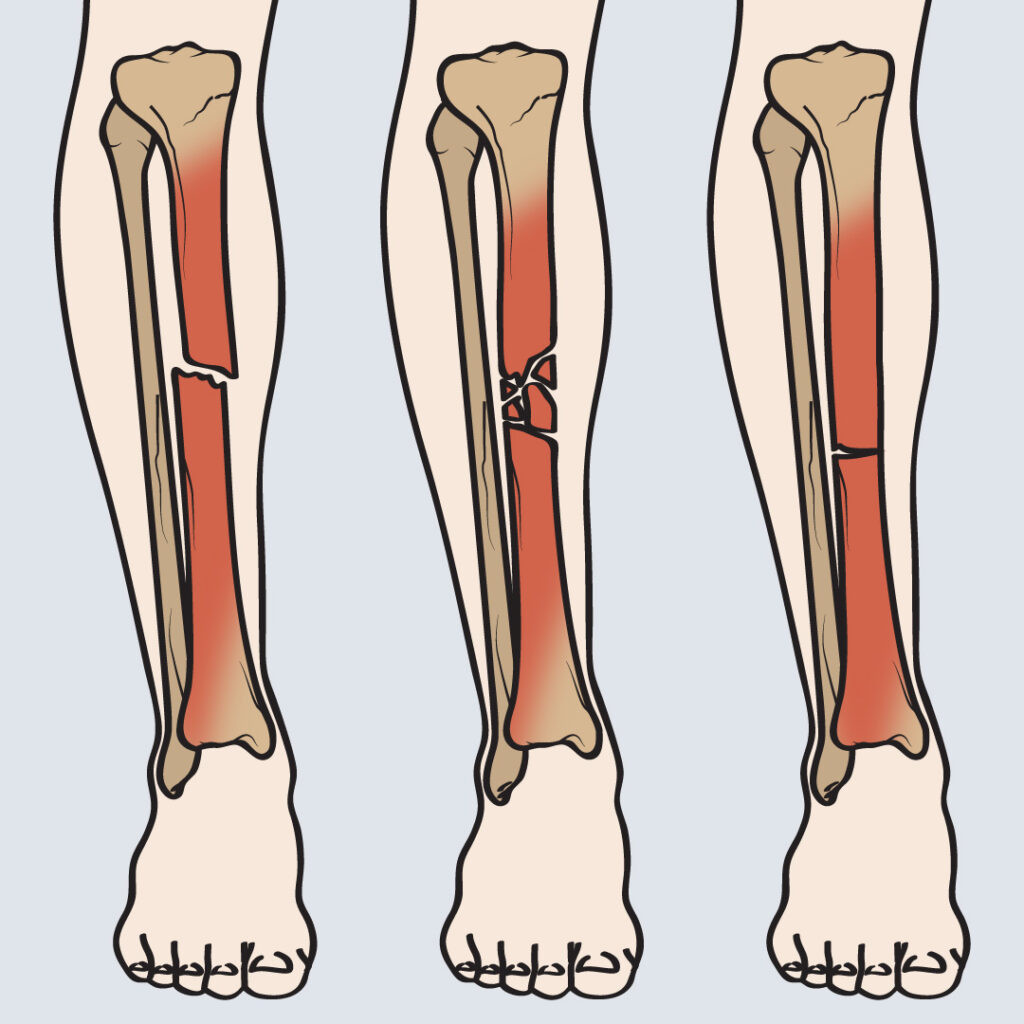
A tibia fracture refers to a break in the shinbone, which is the larger of the two bones in the lower leg. Tibia fractures are relatively common, particularly among the elderly, affecting approximately 4% of this population. Along with the fibula (the smaller bone in the calf), the tibia makes up the lower leg. The tibia is responsible for supporting much of the body’s weight and is crucial for movement in both the knee and ankle. Due to the close proximity of these two bones in the lower leg, fractures to the tibia often involve the fibula as well.
The severity of tibia fractures can vary, depending on the type of impact or force that caused the break. Doctors categorize tibia fractures into different types based on:
- Fracture Location
Tibia fractures are classified according to the area of the bone affected. The three sections of the tibia are:
-
-
The upper (proximal) third of the bone
-
The middle (midshaft) third
-
The lower (distal) third
-
- Bone Fracture Pattern
Tibia fractures can also be categorized based on how the bone breaks, such as:
-
-
Oblique: The fracture line runs at an angle across the bone.
-
Transverse: The fracture line is horizontal.
-
Spiral: The fracture twists around the bone, creating a spiral-like pattern.
-
Comminuted: The bone shatters into several smaller pieces.
-
- Open or Closed: If the bone breaks through the skin, it's classified as an open fracture. If the bone stays under the skin, it’s a closed fracture.
Causes
Tibia fractures typically occur from significant trauma to the lower leg, where the force exceeds the bone's ability to withstand it. The most common causes of tibia fractures include:
-
High-Energy Impacts: These often occur in motor vehicle accidents, where the force can result in severe fractures.
-
Falls: Especially those from a height onto a hard surface, tibia fractures are more frequent in the elderly and athletes.
-
Sports Injuries: Contact sports like soccer or injuries where a low-energy impact combined with a twisting motion can cause a tibia fracture.
Risk Factor
Certain factors can increase the risk of fractures, including tibia fractures. These include:
- Gender
Women are generally more prone to fractures than men due to having smaller bones and lower bone density. Bone density tends to decrease further after menopause.
- Excessive Alcohol Consumption
Heavy drinking at a young age can decrease bone density, raising the likelihood of fractures.
- Steroid Medication Use
Long-term use of steroid medications, like prednisone, can weaken bones and make them more fragile.
- Medical Conditions
Health conditions such as rheumatoid arthritis, osteoporosis, and diabetes can reduce bone density, making bones more prone to breaking. Additionally, a history of previous fractures can increase the risk of future fractures.
Symptoms
The most common sign of a tibia fracture is intense pain in the shinbone. Other symptoms associated with a tibia fracture may include:
-
Pain that is concentrated in one specific area of the shinbone, or in multiple areas if there are several fractures
-
Swelling in the lower leg
-
Difficulty or complete inability to stand, walk, or bear weight on the affected leg
-
Deformities in the leg or a noticeable difference in leg lengths
-
Bruising around the broken bone
-
Nerve-related symptoms, such as tingling or numbness in the leg
-
In cases of open fractures, the bone may protrude through the skin.
Diagnosis
To diagnose a tibia fracture, your doctor will begin by asking questions about your medical history, the way the injury occurred, and any existing health conditions you may have. They will also inquire about any medications you're taking and any known allergies.
The next step involves a physical examination, followed by diagnostic tests to confirm the fracture and assess its severity and type. This process helps the doctor determine the most appropriate treatment.
Some of the diagnostic tests your doctor may order include:
- Skeletal X-rays
This is the most common test used to examine the tibia’s structure and detect any breaks or fractures in the bone.
- Computed Tomography (CT) scan
In certain cases, especially when fractures occur near joints, a CT scan may be requested. It provides a detailed, three-dimensional image of the bone and offers greater clarity than an X-ray.
- Magnetic Resonance Imaging (MRI)
An MRI is useful in providing detailed images of the surrounding muscles and ligaments, helping doctors identify any soft tissue damage near the broken bone.
Management
The treatment approach for a tibia fracture depends on various factors, including your overall health at the time of the injury, the fracture's severity, and whether there are any injuries to the surrounding soft tissues.
Surgical Procedures
For more serious fractures, surgery may be required to ensure the bone heals correctly. Surgical interventions aim to hold the bone in place, facilitating proper alignment and healing.
Possible surgical procedures include:
- Internal Fixation
This involves the use of metal screws, plates, or rods inserted directly into the bone to stabilize and align the fracture. This procedure, commonly referred to as pinning, is intended to aid in the proper healing of the bone.
- External Fixation
Unlike internal fixation, metal pins are placed inside the broken bone, and a special metal rod or circular frame is attached to the outside of the body to keep the bone in position.
Non-Surgical Management
If surgery is not necessary or feasible, non-surgical treatment methods are available:
- Cast or Splint
A cast or splint is used to immobilize the fractured area, preventing movement and allowing the bone to heal properly.
- Brace
A functional brace helps maintain the proper alignment of the broken bone while allowing the patient some degree of mobility.
The healing time for a tibia fracture varies depending on the fracture’s severity and type, typically ranging from 4 to 6 months. Most patients will require physical therapy and rehabilitation to regain full function. Assistive devices, such as crutches or a walker, may also be used during the recovery process to help patients return to normal activities.
Complications
While most tibia fractures heal without significant problems, some complications can arise, including:
-
Issues from surgical procedures, such as infection or bleeding.
-
Damage to surrounding nerves, muscles, or blood vessels.
-
Compartment syndrome, a serious condition where pressure builds up in the muscle compartments, which can lead to permanent damage if not treated promptly.
-
Bone infection.
-
Non-union, where the bone fails to heal properly and stays in separate pieces.
Prevention
Tibia fractures usually result from an impact to the lower leg, often due to motor vehicle accidents or sports injuries. To reduce the risk of such fractures, it’s important to exercise caution while driving and ensure that you use the correct protective gear when participating in physical activities.
Falls are another common cause of fractures. To prevent falls at home, ensure that the living spaces are clean and free of obstacles on the floor. For elderly individuals, installing handrails in bathrooms and bedrooms, along with wearing non-slip footwear, can greatly reduce the risk of falls.
Maintaining strong bones is essential in preventing fractures. Regular physical activity, such as jogging or weightlifting, can help strengthen bones. A diet rich in calcium, found in foods like milk and green vegetables, can also reduce the risk of bone conditions like osteoporosis. Additionally, quitting smoking and limiting alcohol intake are key steps in maintaining bone density.
When to See a Doctor?
It is essential to seek immediate medical attention if you experience an injury and show symptoms of a tibia fracture, such as:
-
Severe pain
-
Bruising
-
Swelling
-
Deformity, like uneven leg lengths
Looking for more information about other diseases? Click here!
- dr Hanifa Rahma
Thompson JH, Koutsogiannis P, Jahangir A. (2022, January). Tibia Fractures Overview. Treasure Island (FL): StatPearls Publishing. Retrieved January 22, 2023, from https://www.ncbi.nlm.nih.gov/books/NBK513267/.
Dangers JE. (2022, December). Tibia and Fibula Fracture Management in the ED Workup. Medscape. Retrieved January 22, 2023, from https://emedicine.medscape.com/article/826304.
Patel M. (2022, March). Open Tibia Fractures Workup. Medscape. Retrieved January 22, 2023, from https://emedicine.medscape.com/article/1249761.