Definition
Hermansky-Pudlak Syndrome (HPS) is a rare inherited metabolic disorder characterized by:
-
Vision impairment
-
Albinism, a group of inherited conditions leading to reduced skin pigmentation
-
Platelet dysfunction, which impairs blood clotting during bleeding
Currently, there are 11 known types of HPS, and more types may be identified in the future.
Causes
HPS is an autosomal recessive condition, meaning both parents must carry the faulty gene to pass it on to their child. If both parents are carriers, each pregnancy has:
-
A 25% chance of the child being born with Hermansky-Pudlak syndrome
-
A 50% chance of the child being a carrier of the gene but not showing symptoms
-
A 25% chance that the child will neither have the syndrome nor be a carrier
Risk Factor
Although Hermansky-Pudlak syndrome is found in many countries worldwide, it is particularly common among individuals of Puerto Rican descent. In northwest Puerto Rico, 1 in 20 people carry the HPS 1 gene, and 1 in 1,800 individuals has the syndrome.
Globally, the incidence of the syndrome is between 1 and 9 cases per 1,000,000 people. Research suggests that HPS is more prevalent in Japan and Switzerland.
Symptoms
The severity of Hermansky-Pudlak syndrome varies greatly, with symptoms ranging from mild to very severe. Symptoms can include:
Albinism
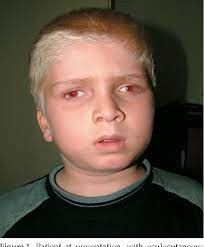
There is a wide range of pigmentation issues in people with HPS. Some individuals may have very light skin and hair, while others may have darker hair but only show pigmentation issues in the eyes.
Visual Impairment
Vision problems in patients with Hermansky-Pudlak Syndrome (HPS) are similar to those seen in other forms of albinism. These issues arise due to abnormal development of the retina and optic nerve, leading to reduced visual acuity, which can sometimes result in blindness.
Other vision-related problems that may occur in HPS patients include:
-
Photophobia or sensitivity to light
-
Strabismus or crossed eyes
-
Nystagmus or rapid and involuntary eye movements
Nystagmus is a common condition in all individuals with HPS. It tends to be more noticeable when the person is tired, stressed, anxious, or angry. As people with HPS age, the severity of nystagmus may lessen.
Prolonged Bleeding
A key characteristic of Hermansky-Pudlak Syndrome is platelet dysfunction, which can lead to prolonged bleeding.
Platelets play a crucial role in the body’s ability to stop bleeding. These cells are produced in the bone marrow and circulate in the blood. Platelets help stop bleeding by forming blood clots at injury sites and by releasing substances that trigger a cascade of clotting reactions.
In HPS, platelet dysfunction can cause easy bruising. Individuals may experience frequent nosebleeds or notice that bleeding lasts longer than usual when injured. Some HPS patients may also encounter excessive bleeding during medical procedures like dental work. The bleeding symptoms can range from mild to severe.
Diagnosis
To diagnose Hermansky-Pudlak Syndrome, the doctor will conduct a medical interview, physical examination, and various diagnostic tests. After confirming the diagnosis of HPS, genetic testing may be performed to identify the specific mutated gene, which can help predict the patient’s future symptoms.
Standard blood tests typically do not show any abnormalities in HPS patients. However, blood clotting tests, such as prothrombin time, partial thromboplastin time (PTT), and platelet count, usually appear normal.
In some cases, HPS patients with severe bleeding issues may show decreased activity of von Willebrand factor, a component in the blood responsible for normal clotting.
The definitive test for diagnosing HPS involves observing blood platelets under an electron microscope. Genetic testing is also available in some cases, though it is limited because not all genetic variants of HPS may have been identified. Once the diagnosis is confirmed, genetic testing can help determine the specific type of HPS.
For patients with symptoms of colon inflammation, a colonoscopy (a procedure that uses a camera-equipped tube to examine the colon) may be recommended.
Management
Currently, there is no specific cure for Hermansky-Pudlak Syndrome, though research is ongoing. Treatment mainly focuses on managing the symptoms of the disease.
Patients are advised to protect their skin from excessive sun exposure due to its sensitivity. They are also at increased risk for sun-related skin damage, such as skin cancer or solar keratosis.
Individuals with bleeding issues may be given medications that help promote blood clotting. For patients with more severe bleeding, platelet transfusions may be necessary. Women with heavy menstrual bleeding may be treated with birth control pills or, in some severe cases, undergo surgical procedures. Patients with HPS should avoid medications that can increase the risk of bleeding, such as aspirin, ibuprofen, heparin, and other similar drugs.
Complications
Individuals with Hermansky-Pudlak Syndrome (HPS) may face additional complications depending on the variant of the mutated HPS gene. These complications may include:
Pulmonary Fibrosis
Pulmonary fibrosis is a common issue in HPS types 1, 2, and 4. This condition involves scarring in the lungs that interferes with their ability to expand and contract during breathing. Symptoms of pulmonary fibrosis in HPS generally begin in the mid-30s, though some cases may emerge in the early 20s. Without proper treatment, affected individuals typically succumb to the condition between the ages of 45 and 55.
Signs that lung problems may be present include shortness of breath, difficulty exercising, and unusual fatigue. As the condition progresses, individuals with HPS may develop a persistent dry cough. It is important for HPS patients to avoid exposure to cigarette smoke and toxic fumes, as these can aggravate lung inflammation.
Inflammatory Bowel Disease
In some cases, inflammation in the intestines can result in inflammatory bowel disease. This condition is typically seen in adolescence, but only about 15% of individuals with HPS will experience intestinal inflammation. Symptoms of inflammatory bowel disease include diarrhea, weight loss, cramps, and blood in the stool.
In some situations, platelet abnormalities may lead to severe, life-threatening bleeding, especially in cases of surgery, gastrointestinal bleeding, trauma, or when medications that affect platelets are used.
Prevention
The only way to prevent Hermansky-Pudlak Syndrome is by undergoing genetic testing before attempting to conceive. This test can reveal whether you or your partner carry the HPS gene, which allows you to determine the likelihood of having a child with HPS.
When to See a Doctor?
If you or your child experience any of the symptoms mentioned, it is important to consult a doctor. Early diagnosis and treatment can help prevent or delay the onset of complications.
Looking for more information about other diseases? Click here!
- dr Hanifa Rahma
Sara (2016) HPS information: Hermansky-Pudlak Syndrome Network, HermanskyPudlak Syndrome Network. Available at: https://www.hpsnetwork.org/hps-information/ (Accessed: April 19, 2023).
Hermansky Pudlak syndrome - symptoms, causes, treatment: Nord (2018) National Organization for Rare Disorders. Available at: https://rarediseases.org/rare-diseases/hermansky-pudlak-syndrome/ (Accessed: April 19, 2023).
Hermansky-Pudlak Syndrome: Pulmonology & Critical Care (no date) Loyola Medicine. Available at: https://www.loyolamedicine.org/find-a-condition-or-service/pulmonology-and-critical-care/pulmonology-critical-care-conditions/hps (Accessed: April 19, 2023).