
Definition
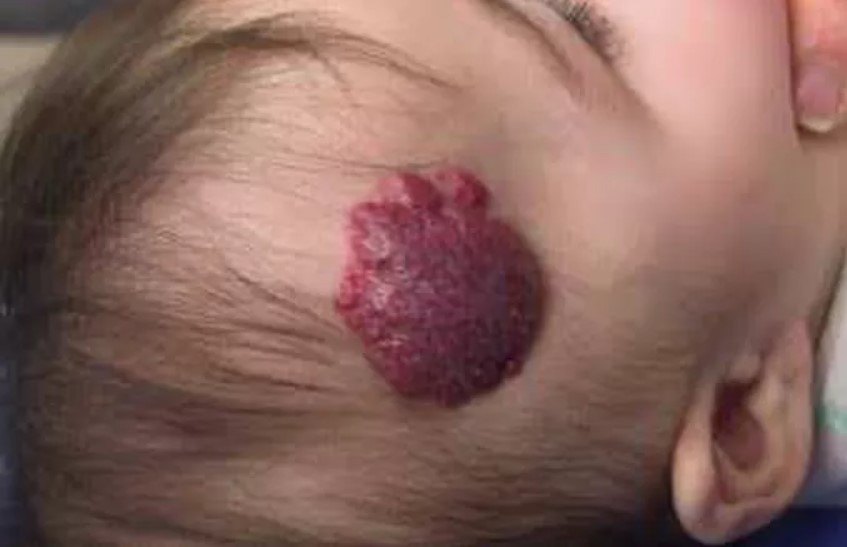
Cavernous hemangioma is a collection of thin-walled capillaries (small blood vessels that connect arteries and veins) that swell and form a benign lump called an angioma. The thin walls of the capillaries make these hemangiomas prone to bleeding. Blood within the capillaries usually moves very little or not at all.
Other names for cavernous hemangioma include cerebral cavernous malformation, cavernoma, hidden vascular malformation, or cavernous malformation. About 1 in 200 people have cavernous hemangiomas, typically discovered between the ages of 20 and 30.
Causes
Approximately 80% of cavernous hemangiomas have no known cause. This is referred to as sporadic cavernous hemangioma, which usually forms only one hemangioma. Researchers suggest that radiation therapy to the head or spine may lead to cavernous hemangiomas.
About 20% of cavernous hemangiomas are caused by genetic factors (inherited within families), specifically due to mutations in certain genes.
Risk Factor
Several factors can increase the likelihood of developing cavernous hemangiomas, including:
- Family history of cavernous hemangioma: If someone has cavernous hemangioma, their child has a 50% chance of developing it as well. Multiple cavernous hemangiomas are more often found in individuals with a family history of the condition.
- Hispanic ancestry from Mexico
- European-American ancestry from Oklahoma
- Ashkenazi Jewish ancestry
- Presence of another vascular abnormality called developmental venous anomaly
Symptoms
Although common, only 1 in 10 people with cavernous hemangioma will exhibit symptoms, as the hemangiomas can remain stable for many years. Therefore, the condition is usually undetected until the hemangioma ruptures and bleeds, causing seizures or strokes. However, sometimes a ruptured cavernous hemangioma may not cause any symptoms. Having multiple cavernous hemangiomas does not necessarily mean a person will have more symptoms. Hemangiomas that occur in multiples usually grow on the same side of the brain.
Symptoms of cavernous hemangioma can vary depending on the size, location, and number of hemangiomas and may differ from person to person. Possible symptoms include:
- Seizures, often the first symptom to appear
- Blurred or double vision, or other visual disturbances
- Weakness in the arms or legs
- Facial drooping
- Unsteady walking
- Headaches
- Dizziness, ringing in the ears, or hearing loss
- Speech difficulties
- Trouble understanding conversations
- Restlessness or personality changes
If you have a cavernous hemangioma and have experienced bleeding, the risk of a repeat bleed within five years is 20%. If the hemangioma is located in the brainstem, the risk of a repeat bleed within five years is 30%. After five years, the risk of repeat bleeding gradually decreases until there is no further risk.
Diagnosis
To diagnose cavernous hemangioma, the doctor will inquire about your medical history and family history and conduct a physical examination. The diagnosis can be confirmed with radiological tests on the brain, such as an MRI. More specialized tests include:
- Susceptibility-weighted imaging (SWI): A specific type of MRI that shows small areas of bleeding and remnants of past bleeds.
- Orbital ultrasonography: An ultrasound of the blood vessels near the eyes.
- Tonometry: A test to measure the fluid pressure inside the eye.
Hemangiomas are often discovered incidentally during scans for other conditions.
Cavernous hemangiomas resemble a raspberry, with blood-filled sacs separated by connective tissue. They can range in size from 2 millimeters to several centimeters or larger.
This condition most commonly occurs in the brain or brainstem but can also affect the spine or other parts of the body, such as the skin, liver, and eyes.
Management
Treatment options for cavernous hemangioma include observation, medication, and surgery. The choice of treatment depends on the location of the hemangioma and whether it has caused symptoms or bleeding. If the hemangioma does not cause symptoms, the doctor may opt for observation and schedule regular brain MRI scans. The frequency of MRI scans will be determined by the doctor’s judgment.
If there are symptoms like headaches or seizures, the doctor may prescribe medications to control those symptoms. Surgery to remove the abnormal blood vessels is the most effective treatment, particularly if performed within two years of the first seizure. Surgery is recommended in cases of:
- Hemangioma that has experienced bleeding
- Bleeding that causes neurological problems such as limb weakness or vision disturbances, especially if the condition worsens
- Hemangiomas that cause seizures that cannot be controlled with medication
Before surgery, the doctor will assess whether the benefits of the procedure outweigh the risks of damaging healthy brain tissue.
Complications
Cavernous hemangiomas in the brain can rupture and bleed, causing seizures or strokes. If left untreated, hemangiomas can lead to permanent blindness. In severe cases, they may be life-threatening. The risk depends on:
- Size of the hemangioma
- Number of hemangiomas
- Location in the brain, brainstem, or spinal cord
- Likelihood of the hemangioma rupturing with severe bleeding
On the other hand, surgery to remove a hemangioma carries risks such as stroke, paralysis, coma, or death. The risks are influenced by the patient's overall health, the size, location, and number of hemangiomas, and the skill and experience of the neurosurgeon.
Prevention
In general, cavernous hemangiomas cannot be prevented. If you have a family history of hemangiomas, you can consult with a genetic specialist for testing and counseling.
If you have a cavernous hemangioma, you can manage risk factors for bleeding by:
- Maintaining overall health:
- Keeping blood pressure stable (< 120/80 mmHg)
- Keeping cholesterol levels < 200 mg/dL, LDL < 100 mg/dL, and non-HDL < 130 mg/dL
- Keeping blood sugar stable, with fasting glucose < 99 mg/dL and postprandial glucose < 140 mg/dL
- Consulting your doctor if you are taking blood thinners like aspirin, as they can worsen bleeding if it occurs
- Exercising regularly for at least 30 minutes, five times a week. There is no evidence that exercise increases the risk of hemangioma bleeding.
- Avoiding tobacco
- Limiting alcohol consumption to two drinks per day for men and one for women
You are also advised to undergo regular health checkups, at least once a year. Take medications as prescribed by your doctor, and do not stop or change dosages without consulting them.
When to See a Doctor?
Seek medical attention immediately if you experience seizures or signs of potential brain hemorrhage, such as:
- Sudden, severe headache
- Nausea
- Vomiting
- Weakness or numbness on one side of the body
- Difficulty speaking or understanding speech
- Blindness
- Double vision
- Body imbalance
- dr. Alvidiani Agustina Damanik
Cavernous Hemangioma: Symptoms, Treatment & Causes. Cleveland Clinic. (2022). Retrieved 20 April 2022, from https://my.clevelandclinic.org/health/diseases/21594-cavernous-hemangioma.
treatment, C. (2022). Cavernous Hemangioma Symptoms & Treatment | Aurora Health Care. Aurora Healthcare. Retrieved 20 April 2022, from https://www.aurorahealthcare.org/services/aurora-spine-services/cavernous-hemangioma.
Cavernous malformations - Symptoms and causes. Mayo Clinic. (2022). Retrieved 20 April 2022, from https://www.mayoclinic.org/diseases-conditions/cavernous-malformations/symptoms-causes/syc-20360941.
Bokhari, M., & Al-Dhahir, M. (2022). Brain Cavernous Angiomas. Ncbi.nlm.nih.gov. Retrieved 20 April 2022, from https://www.ncbi.nlm.nih.gov/books/NBK430871/.
D'Souza, D. (2022). Cerebral cavernous venous malformation | Radiology Reference Article | Radiopaedia.org. Radiopaedia.org. Retrieved 20 April 2022, from https://radiopaedia.org/articles/cerebral-cavernous-venous-malformation.