Definition
Facioscapulohumeral muscular dystrophy (FSHD) is a genetic disorder affecting the muscles of the face, shoulders, and upper arms. The term "facioscapulohumeral" comes from Latin: "facies" (face), "scapula" (shoulder blade), and "humerus" (upper arm). Muscular dystrophy refers to a rapid decline in muscle function. FSHD is characterized by increasing weakness and muscle wasting.
In FSHD, weakness initially affects the face, shoulders, and upper arms but can also extend to other muscles.
FSHD affects approximately 4 in 100,000 people and is the third most common type of muscular dystrophy after Duchenne Muscular Dystrophy, Becker Muscular Dystrophy, and Myotonic Dystrophy.
Causes
FSHD is caused by a mutation or defect in the genetic material on chromosome 4.
FSHD can be inherited from either parent but can also occur without a family history. Most individuals with FSHD inherit the condition from one parent, but in 10-30% of cases, neither parent carries the FSHD gene.
Risk Factor
A family history of FSHD increases the risk of developing the condition. FSHD occurs equally in males and females, but males are more likely to exhibit symptoms.
Symptoms
FSHD can be classified based on the age of symptom onset:
- Infantile FSHD. Symptoms can appear shortly after birth and generally involve more severe muscle weakness. It can also include hearing and vision issues and is linked to more severe DNA abnormalities.
- Adult-onset FSHD. This is more common, including FSHD that appears during adolescence, although facial muscle weakness can start in early childhood.
About 90% of FSHD cases show symptoms between the ages of 10 and 26, with muscle weakness and atrophy around the eyes, mouth, shoulders, abdomen, upper arms, and lower legs. Early symptoms often include facial or shoulder muscle weakness, which may not always be bilateral.
The severity of the condition varies greatly. Mild cases may not be noticeable until later in life, while severe cases are evident in infancy or early childhood. Some individuals may never develop symptoms.
Common symptoms include:
- Weakness of facial muscles often causes difficulty drinking through a straw and whistling due to weakness of the cheek muscles, difficulty lifting the corners of the mouth when smiling, and difficulty pronouncing words. In addition, facial muscle disorders can also cause facial expressions that look depressed or angry.
- Weakness in the muscles around the eyes can prevent the eyes from closing completely when a person sleeps. This can lead to dry eyes and other eye problems.
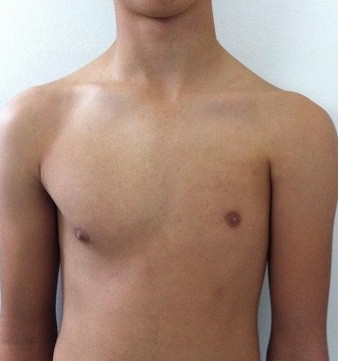
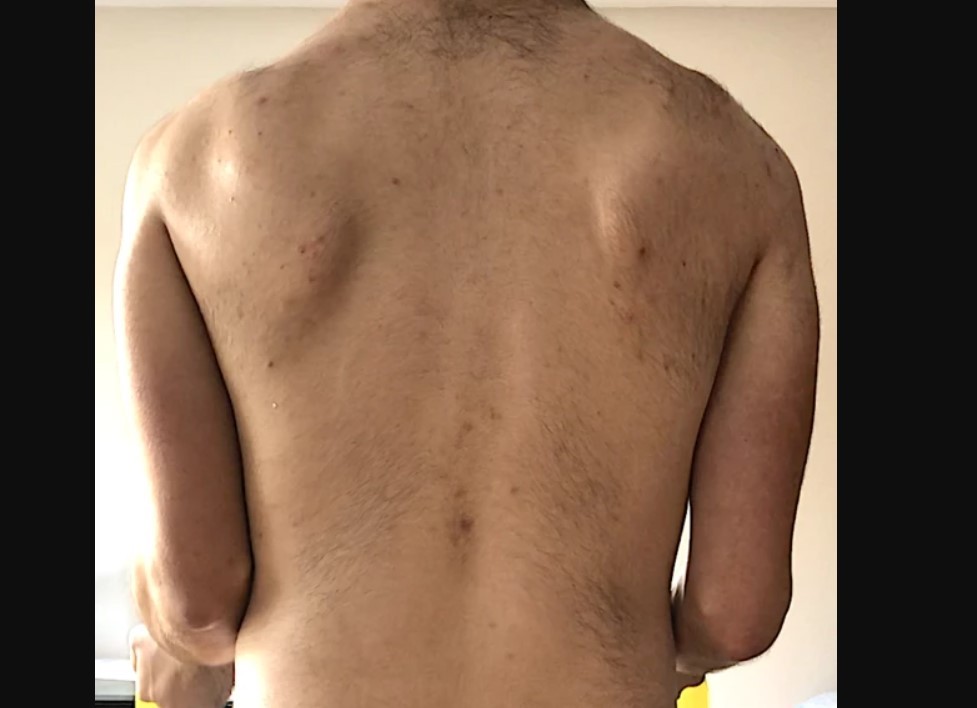
- Weakness in the shoulder muscles often causes the shoulder blades to stick out on the back (called scapular winging) or the shoulders to droop.
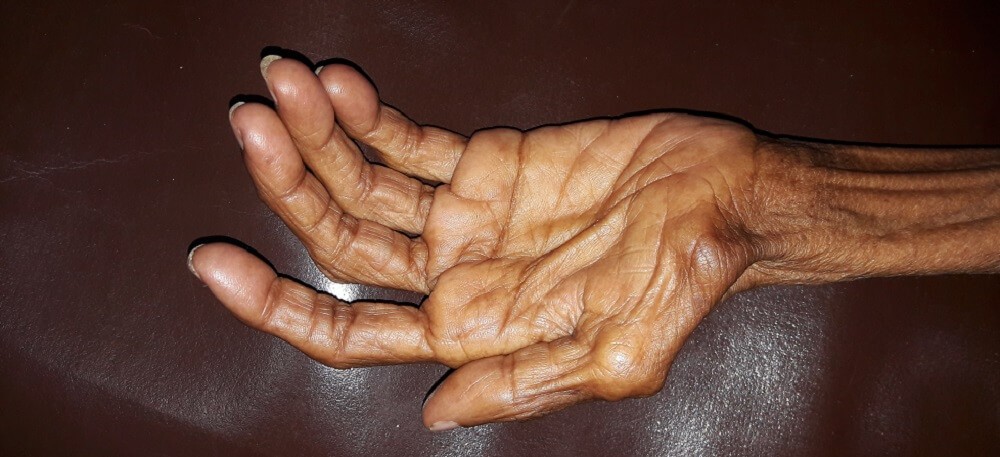
- Weakness in the shoulder and upper arm muscles can make it difficult to lift the arms overhead or throw a ball.
Muscle weakness in FSHD develops gradually over decades and may progress to other parts of the body, such as the lower leg muscles. This will disrupt athletic performance due to decreased strength and balance. This weakness can be severe enough to impair walking.
Additional symptoms may include:
- Mild high-frequency hearing loss
- Retinal abnormalities
- Cardiac rhythm disturbances
These additional symptoms are rare, often unnoticed, and usually identified during health check-ups.
Diagnosis
FSHD can be diagnosed through a thorough physical examination, identification of characteristic FSHD signs, detailed personal and family medical history, and genetic testing.
Some laboratory tests may show increased levels of certain enzymes in the blood, like serum creatine kinase.
Electromyography (EMG) can be used to record the electrical activity of skeletal muscles during rest and contraction.
Muscle biopsies are generally not informative for diagnosing FSHD.
Family members of individuals with FSHD can benefit from physical examinations to detect signs and symptoms related to FSHD and genetic testing for diagnostic and family planning purposes.
Molecular genetic testing to identify chromosomal abnormalities can confirm an FSHD diagnosis.
Management
Treatment for FSHD aims to relieve symptoms. This therapy requires collaboration among a neurologist, orthopedic doctor, medical rehabilitation doctor, ENT doctor, pulmonologist, and other specialist doctors.
Physical therapy and orthopedic treatment may be part of the disease's management to help keep muscles flexible, stop muscle atrophy, and manage pain. Exercise may help people with FSHD, according to some research. Certain activities may benefit from the use of specific assistive devices. Devices that assist the legs can make walking easier. A wheelchair or other mobility aid may be necessary in certain situations due to severe muscle weakness.
Additionally, speech therapy and other assistive technology can help with communication and speech issues related to facial weakness and/or hearing loss.
Some patients may benefit from surgery to attach the shoulder blade to the chest wall in order to stabilize the shoulder blade and increase upper arm mobility.
Pulmonary function tests are recommended for all people with FSHD. Depending on the results, a sleep evaluation may also be recommended to assess breathing capacity while lying down and sleeping. Breathing support, usually at night, may be given to people who have breathing problems that are known from pulmonary function tests and sleep evaluations.
Eye (retinal) tests may be indicated in people with severe disease. Hearing tests may also be performed in children and some adults.
Complications
In FSHD, the condition typically worsens gradually and rarely affects the heart or respiratory system. Most people with FSHD can live a normal life.
However, in severe FSHD, weakness in the lower legs can occur, resulting in a condition known as foot drop, which impairs walking and increases the risk of falling.
Weakness in the waist and pelvic muscles makes it difficult to climb stairs or walk long distances. Furthermore, people with FSHD may experience excessive curvature of the lower back spine (lordosis) as a result of abdominal muscle weakness.
Prevention
FSHD cannot be entirely prevented or cured, but certain lifestyle habits can help prevent complications, such as maintaining a nutritious diet and regular exercise.
When to See a Doctor?
Consult a doctor if you experience FSHD symptoms. Genetic counseling is recommended for couples with a family history of FSHD who are planning to have children.
Looking for more information about other diseases? Click here!
- dr. Alvidiani Agustina Damanik
Facioscapulohumeral Muscular Dystrophy (FSH, FSHD) - Diseases | Muscular Dystrophy Association. (2022). Retrieved 19 September 2022, from https://www.mda.org/disease/facioscapulohumeral-muscular-dystrophy
Conditions, G. (2022). Facioscapulohumeral muscular dystrophy: MedlinePlus Genetics. Retrieved 19 September 2022, from https://medlineplus.gov/genetics/condition/facioscapulohumeral-muscular-dystrophy/
Facioscapulohumeral Muscular Dystrophy - NORD (National Organization for Rare Disorders). (2022). Retrieved 19 September 2022, from https://rarediseases.org/rare-diseases/facioscapulohumeral-muscular-dystrophy/
Facioscapulohumeral muscular dystrophy Information | Mount Sinai - New York. (2022). Retrieved 19 September 2022, from https://www.mountsinai.org/health-library/diseases-conditions/facioscapulohumeral-muscular-dystrophy
What Is Facioscapulohumeral Muscular Dystrophy?. (2022). Retrieved 19 September 2022, from https://www.verywellhealth.com/facioscapulohumeral-muscular-dystrophy-overview-5210065